Church attendance and predictive models

Happy Easter, to those of you who celebrate!

I did in fact make it to church this morning, which weirdly enough got me pondering predictive models.  The connection’s not as tenuous as you might think.  The church I’ve been going to is incredibly large…the building that is.  My best guess is it could easily hold 1000 people.  From what I’ve counted*, there seems to be about 100 people there on typical Sunday mornings, which makes the place seem quite cavernous.  This morning I was not able to do my normal count (I let a seven year old pick where to sit, and ended up in the front row), so I was only able to get a brief glance at the crowd.  It occurred to me that it’s extremely hard to estimate the size of a crowd that is in such an outsized space, especially when that crowd distributes themselves as New England churchgoers tend to.
All of this got me to browsing around the web, looking for any data on church attendance, which led me to this article for church leaders about attendance trends.  It’s a bit long, but it has some interesting research in to who goes to church and who says they go to church.  What struck me as interesting though, was point number 7, on page number 5.  If you don’t feel like clicking on the link, it’s a model of how church attendance in America will look by 2050 (percentage of population down, raw numbers up).
What struck me about this was what a funny thing this was to model.  In order to model church attendance, one must fundamentally presume that it is a purely sociological phenomena that is likely to trend consistently for 40 years.  While I think that can make for some interesting numbers on a screen, it actually seems to violate some assumptions most Christians themselves would hold (i.e. that there is a Divine force involved that might not work on a linear scale).  I’m not saying he shouldn’t have modeled this, but it did get me thinking about what types of behavior lend themselves to modeling and which ones do not.  Some phenomena change linearly, some exponentially, some decrease/increase step-wise.  I’m not sure which one church attendance fits in to, but I’d be interested in seeing the rationale for picking one over the others.
I’ve had a few people send me some studies that relied on models, and I think I’m going to try to take a look at some of them this week.  This could get interesting.
*I count people during hymn singing time.  I probably started doing this when I was about 4, as far as I can recall. 
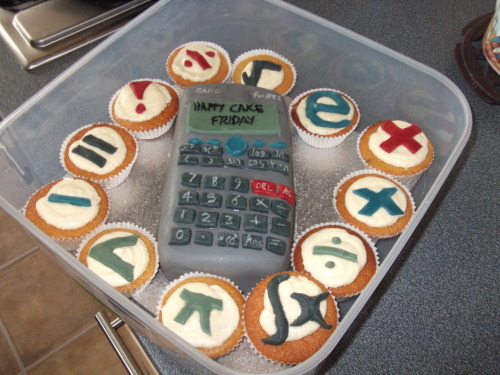
Friday Fun Links 3-29-13

Oh man, here’s one that’s appropriate…a gif of winter disappearing!!!

This one’s personal, because this is my field.  Even if this doesn’t quite live up to expectations, every weapon in the arsenal gives all of us a better shot.

This is possibly the most interesting theory I’ve seen on why women don’t stay in STEM.  In case you’re curious, using SAT scores as a measure, my math and verbal skills are identical to within one point.

This is my pick for gif of the week.

Now here’s my favorite dinosaur site this week.  It might even teach mr how to say archaeopteryx correctly!

Brain freeze

I don’t have time for a regular post tonight, ironically because I spent most of my night taking a statistics midterm.  I’d make a joke about 95% confidence intervals, but I don’t want to jinx anything.

Wish me luck.

The Power of a Question

I’ve been spending the past few weeks working on a survey for work, and it’s been some interesting work.  The survey itself took a few hours to write, the rest of the time has been attempting to reword the questions so that we make sure we’re actually asking what we want to ask without affecting the respondents opinion or leading to any particular answers.  We’re trying to get some data no one’s ever gotten before, so we have no motivation to guide the questions anywhere in particular.

I was thinking about this when I saw this story today.  Apparently the British Humanist Society is going after the Church of England for putting out a press release that said that 81% of British adults believed in the power of prayer.  The BHS is taking issue with this because apparently this data was taken from this survey.   The question that so many people answered in the affirmative was not actually “do you believe in the power of prayer?”, but rather “Irrespective of whether you currently pray or not, if you were to pray for something at the moment, what would it be for?’.  

Now that seemed like a bit of a stretch, so I looked a little further.  

It turns out that one of the options on the survey was “I would never pray for anything”.  15% of people answered that, and 4% answered that they didn’t know.  Thus, the accurate statement really would have been “81% of people don’t say they don’t believe in the power of prayer” not “81% of people believe in the power of prayer”.  

I thought this was a bit of interesting story because I don’t often see survey question nuances/reporting make the news, the Church of England did in fact twist the results, but the BHS did leave out the fact that there was actually a “I wouldn’t pray” option.  

It’s not the question, it’s how you ask it.

Monday Fun Links 3-25-12

Because I didn’t get to it on Friday.

This is a sad way to start the week, apparently some little girl totally had my childhood (hell, adulthood) dream come true.

In other news, are sabermetrics coming to basketball?

This is fun: book covers with more honest titles.  Gatsby renamed and shots at Howard Zinn?  Gotta check it out.

Relatedly…what Dr Suess books are really about.

If you’re looking for an even shorter read, here are the 140 best Twitter feeds of the year.

Salt over replacement

One of my favorite baseball stats to watch people figure out is the VORP, or value over replacement player.  This stat is an interesting one, in that endeavors to calculate not just how good a particular player is in respect to zero, but rather in respect to how much better the team does with the player in question as opposed to a perfectly average player from the same year.

There’s a lot more to it than that, but that’s not the purpose of this post.  The purpose of this post is to mention that I would LOVE a similar stat for nutrition research.  Terri put up a post about a new salt study (and gave me a very nice shout out…thanks you!), and it got me thinking about nutrition research in general.

The short version of the study is that researchers collected surveys from 50 countries, took a variety of studies about sodium contributions to disease, and created a model that purports to show how many deaths are due to excess consumption of sodium (2.3 million)

You’ll notice I didn’t link to the study.  That’s because there is no study, at least not one that’s published.  This was actually a conference paper that was presented in New Orleans at a cardiology conference.  Now this doesn’t mean there’s anything wrong with it.  Many researchers use conferences drum up interest/get early feedback on their research (including me).  However, this does mean much of what they did is not yet available, and the peer review process is much less stringent.

That being said, there’s not much to criticize* without the details (except the headlines about it, those are awful), but it did get me thinking about the point of all of this.  I don’t know exactly what countries were covered, or what the major sources of sodium  in their diets were.  It strikes me though, that for at least some of the people in these countries may not have a terrible amount of choice in the high sodium foods they’re eating.  If sodium is being used to say, preserve food, or if processed (and shelf stable) foods are a big source of calories, or if salt is being used to make vegetable consumption more palatable, could campaigning to reduce it do some harm?

In nutrition research, we can’t just think about what we shouldn’t be eating, but also why we eat those things.  Salad dressing is a decent source of sodium in my diet, but I can guarantee I wouldn’t eat as many veggies if I had to stop using it.  Does the benefit of the vegetables outweigh the detriment of the sodium?  What is the value over replacement?  When the low-fat craze hit, many people replaced fat in their diet with sugar.  A few decades later, the general consensus is that this was a bad idea.

The fundamental assumption of a study like this is that you can subtract one part of your diet separate from any other piece.  In my opinion, what we really need is a study where you at least explore that people can reduce their sodium without otherwise worsening their diet.  This critical piece seems to be missing from many nutritional public health initiatives.  It’s important though…every dollar spent on an initiative to reduce sodium doesn’t get spent elsewhere.  Proving something in a vacuum has to be followed by research proving it in the real world, otherwise you risk unintended consequences.   A little vice can be good for the soul.

*Okay, I’ll take a shot anyway.  There’s some question about how much good sodium reduction actually does, and I’m really curious how they controlled for racial differences in response to sodium levels.  

March Madness, Data Style…or not

Well my alma mater didn’t make it in to March Madness this year, but we did have a good night last night.  I caught a bit of the game, but spent most of the night watching Georgetown get crushed by a team that didn’t even exist before 1997.  I normally like underdog stories, but I actually was watching the game with a rabid Georgetown alum…so it was a little awkward.

Anyway, I’ve been pondering the role of data in March Madness predictions this week ever since my husband got home from his March Madness auction earlier this week.  Unlike the well known “pick a bracket” set-up, the auction is a fun twist where everyone throws in $50 and then bids on the teams they want.  Payouts get progressively larger depending on how far your team(s) get.  You can get as many teams as your $50 will buy, but if you want to go all in on one team, you can go throw in more money to go higher than $50 (you can’t have spent anything previously if you want to do this).   You do not get any money back if you don’t spend it all.  Teams are auctioned off in random order.
This has normally been a pretty friendly competition (it’s through his work), so he was a little surprised to show up to see someone furiously typing on a laptop.  He asked the guy what was going on, and he told him he’d devised an algorithm based on Nate Silver’s predictions.  He had then assigned a relative dollar amount to each team, and was going to attempt to get bargains.  My husband (who of course puts up with me on a regular basis) was pretty sure he was over thinking it.
My husband’s strategy has stayed pretty simple over the years: don’t bid until later in the game, pick up a team you think can go all the way, and don’t leave money on the table.  He won the first 3 years they did this, and has at least made his entry fee back every year, so I figure he’s got a pretty good strategy.
He watched his coworker with the laptop, curious which teams he would pick.  After watching him get two low-cost-but-unlikely-to-do-much teams, he was wondering how he was going to proceed.  Suddenly the guy turned to him and said “hey, we get back the money we don’t spend, right?”.  “Um….no.” my husband and his other friend answered.  The guy blanched a bit.
To me, this is the problem many people have with data.  The best predictions in the world are useless if you forget to learn the rules of the game.  A beautiful data set is useless if it doesn’t actually help you solve the problem in front of you, and it’s often worse if it sort of helps.  Harder to parse out the uselessness, more tempting to apply a flawed strategy.  How much better to always keep in mind some basic common sense.
I had an interesting discussion lately that led me to realize that my true interest, perhaps, is not actually data analysis.  A more accurate term for what I like is research methodology….the study of how to capture what you actually want to capture.  I love the analysis Nate Silver did, but I’m also impressed with my husband who made 3 key observations about this game: 
  1. People spend more money when everyone else has lots of money.
  2. It’s hard to pick a winner, but easier to pick a team who will at least go to the Elite 8 and make you your money back.
  3. Money you don’t spend is already lost.
Three simple ideas anyone could work out, but have somehow still made him money.  While we don’t yet know the outcome, my guess is they’ll work out yet again this year.  
He has the Jayhawks, in case you’re curious.