(Legal) Truth or Consequences

I’m still putting together some more for my previous series, but in the mean time:

Since starting my current job (where I primarily analyze how to solve operational problems), when I hear a public policy debate, my first question is always something along the lines of “will this solution work?”  
However, there seem to be many people whose first question is “is it Constitutional (or otherwise legal)?”.
On the one hand, I think the “will it work?” question is good to establish first, because then you could potentially use the answer to change the law/amend the Constitution.
On the other hand, I generally believe the Constitution was set up to protect us from a variety of natural consequences from particular legislative overreaches….so perhaps the Constitution question is the more important one and I’m just projecting because of what I do for work.
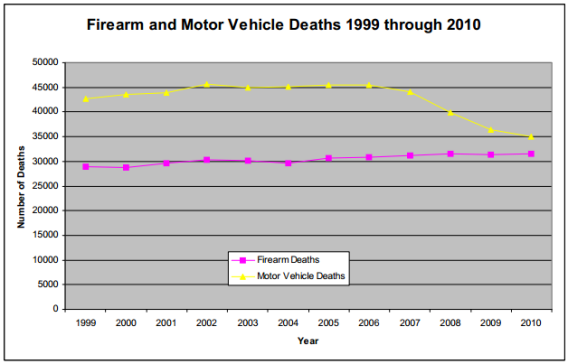
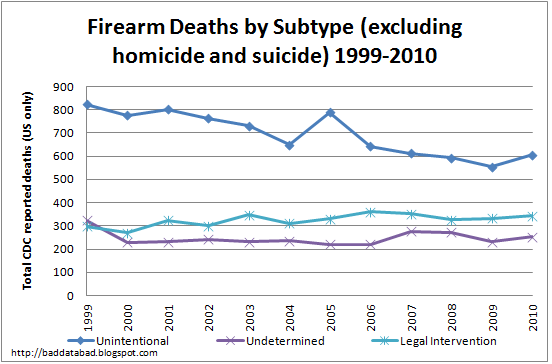
Obviously the ideal is to consider both, but it seems to me that many people have a knee jerk reaction to consider one or the other first.  And no, I’m not considering people who seem to not consider EITHER the usefulness OR the legality….though their number is legion.  This question came up because of the recent events at Sandy Hook, but this doesn’t need to be limited to the gun control debate.
So which approach do you prefer?
Does it depend on the issue?

Benevolent sexism Part 2: Who’s defining this thing anyway?

Definitions are important.  REALLY important.  I’ve blogged before about how confusing things can get when researchers choose to define a word in a way most people wouldn’t think to, and this topic is no exception.

Benevolent sexism is not a term most people use in their daily lives, and thus we should be especially cautious when approaching this term.  When Charles Murray wrote a recent critique of a study (scratch that, an abstract of a study) on benevolent sexism, he defined it up front as “think gentlemanly behavior”.  People in the comments section went on to talk about how great it was to hold doors for people/have people hold doors for them. 
Thus, as my first step, I decided to take a look at what the actual researchers definition of benevolent sexism is.  Not their one sentence summary either, I wanted the assessment test.  After combing through quite few papers, I found that the most common assessment for benevolent sexism appears to be from a 1996 paper* that Google scholar tells me has been cited over 1200 times.  I couldn’t find a free version of the paper, but I found the test here.
Basically the test asks 22 questions….11 designed to assess hostile sexism, and 11 designed to assess benevolent sexism (this test was only designed to test sexism against women, btw).  Before going any further, I decided to take it myself.  It’s a 0 to 5 scale, and you’re scored on the average.  Below 2.5 on either is considered “not sexist”.   Here’s the cheat sheet of which questions assess benevolent sexism, along with the answer that qualifies you as a non-sexist:

  1. No matter how accomplished he is, a man is not truly complete as a person unless he has the love of a woman. (Disagree)
  2. In a disaster, women ought not necessarily to be rescued before men. (Agree)
  3. People are often truly happy in life without being romantically involved with a member of the other sex. (Agree)
  4. Many women have a quality of purity that few men possess. (Disagree)
  5. Women should be cherished and protected by men. (Disagree)
  6. Every man ought to have a woman whom he adores. (Disagree)
  7. Men are complete without women. (Agree)
  8. A good woman should be set on a pedestal by her man. (Disagree)
  9.  Women, compared to men, tend to have a superior moral sensibility. (Disagree)
  10.  Men should be willing to sacrifice their own well being in order to provide financially for the women in their lives. (Disagree)
  11.  Women, as compared to men, tend to have a more refined sense of culture and good taste. (Disagree)
This actually confused me more than it enlightened me.  I mean, I feel I need some context for these questions before I can actually answer them.  I mean, like number 10….is the woman sick?  Is she your wife?  Your daughter?  A cousin?  For #1 and #3….are we excluding gay people on purpose or what? Also, I’m actually pretty cool with single people who are single by choice. And #8, for those of us not alive in the 60’s, what’s up with the pedestal thing?  For #6….I would kinda hope they at least adore their mom, right?  It would kind of worry me if a man didn’t have any women in his life he felt that way about.  To get to Charles Murray’s definition though, how many of these really cover “gentlemanly behavior”? I count two (thought you could persuade me as high as 4)….and there’s no holding doors thing in there at all.
Anyway, vague questions aside, this test is pretty darn standard when it comes to assessing benevolent sexism for research purposes.   So keep this list in mind, and you’ll have a better idea of what’s being referenced here.**
*Glick, Peter, and Susan T. Fiske. “The Ambivalent Sexism Inventory: Differentiating hostile and benevolent sexism.” Journal of personality and social psychology 70.3 (1996): 491.
**In my search for this particular assessment I found a really cranky critique of this assessment test over at Psychology Today.  This test confused me more than made me mad, but I thought the critique was kind of funny.

Benevolent sexism (part 1) OR why no one will give me the good drugs

Today, for the first time in my life, a doctor refused to write me a prescription for a medication I actually needed.

It was an interesting decision on her part, one I agreed with actually, but it fit in to some thoughts I’ve been having lately quite well, so I’m sharing it here.
I mentioned yesterday that I took a nasty tumble down the stairs, and it appears that I’ve severely bruised my tail bone and have some muscle spasms going on to boot.  I went in to the doctor today to verify that nothing was broken and to see if there was anything I should be doing.  I knew going in to this that any medication options would be limited (I’m an absolute lightweight when it comes to pain meds so I decline most of them anyway, and I’m still nursing to boot).  All was going as expected until she got to the part about the muscle spasms.  At that point she told me that normally she’d write me a prescription for muscle relaxers but she “felt uncomfortable giving them to a new mom”.
Now let me be clear:  I agreed with her reasoning.  She knew that I would be holding a small child quite a bit (true), and that I was likely doing a lot of the night time feeding (also true) and that I was unlikely to surrender this duty (once again, true).  Thus, she felt it likely that I would (intentionally or not) end up using the drugs improperly by taking them and then at some point in the next 8 hours holding my child.  Thus, she refused to write me the script.
Now again: she did the right thing.  She was not accusatory, but merely realistic, I told her I understood completely, and we agreed on a different plan that involved ibuprofen and lots of ice.  This is not my regular doctor (she was on vacation) but I thought she did an excellent job of tailoring her medical knowledge around my current life circumstances.  
I bring this up because in the past few months 3 different people have sent me research studies (or commentaries on research studies) around the issue of “benevolent sexism”.   Benevolent sexism is the basic concept of sexism that comes in a “positive” form.  I put positive in quotation marks because some would argue that this is a negative disguised as a positive, and others argue that positive is, well, actually positive.
The complicating factors for this research are twofold.  First, almost all of those doing the research are part of the gender studies crowd and believe benevolent sexism is a bad thing.  Second, recent studies suggest it makes people happier.  
I think this is one of those areas of research where definitions are absolutely crucial.  In reading over various articles that study it, I’ve found definitions that range from the benign (men opening doors and paying for dinner) to the more substantial (refusing to promote women because you assume they would prefer more time with their kids or giving men raises over women because men need to provide for a family).
I’ve read dozens of these studies in the last couple weeks, and as I drove away today, I was pondering how some of these researchers would have viewed my interaction with my doctor.  What would she have said to my husband if he were in the same circumstance?  Would her actions have been coded as paternalistic or realistic?  Would the conclusions have said she was judging me or assessing me?  I know how I would answer these questions, but it was an interesting thought experiment.  
I’m going to put up a few specific examples in the coming days (this post is getting too long as it is) so if you have any thoughts/studies/etc you would like to see included or addressed, leave it in the comments.

Pardon me if I don’t get up/a peek inside my email inbox

Lousy day here in Bad Data Bad-land.  I stayed home from work today because my throat feels like it’s been attacked by razor blades, and in my Nyquil induced haze, I fell down the stairs.   I’m hopeful that I didn’t break anything, but standing/walking/sitting hurts WAY more than it should.

Luckily I still have pain meds left over from my c-section, so that’s a consolation.

If I start slurring my typing by the end of this, you’ll know what happened.

One of the reasons I love the internet is my family’s habit of sending all family emails about random subjects.  The immediate family is 6 + 2 spouses, so the 8 person email chain can get a little amusing.  A few days ago, my mother, who is forever scolding us to get outside more often, forwarded us this article on how hiking boosts creativity.  My brother, a biology teacher, was the first to respond with this:

Love it, but before I love it too much . . .Bethany, could we get an analysis of this creativity test?


I’ve apparently got them all a little nervous when it comes to research now.

Anyway, being the good sister that I am, I thought I’d take a look at the data.  Essentially, the study took a group of people headed on an Outward Bound hiking excursion and gave them a creativity test.  Then it took another group of people, sent them out hiking, and gave them a creativity test after they’d been in the wilderness for about 4 days.  Those out in nature for several days did better to a statistically significant level.

The creativity levels were measured using the Remote Associates Test, which is a test that gives people 3 words and asks them to find the common word that ties them together (ex: falling actor dust*).

Overall, I thought it was an interesting and unique study, definitely one that deserves follow up with a larger sample size and some other variables.  The authors hypothesized that the boost in creativity was due to either technology deprivation or nature exposure, but also noted that:

A limitation to the current research is the inability to determine if the effects are due to an increased exposure to nature, to a decreased exposure to technology, or to other factors associated with spending three days immersed in nature. In the majority of real-world multi-day hiking experiences, the exposure to nature and technology are inversely related and we cannot determine if one factor has more influence than another. From a scientific perspective, it may prove theoretically important to understand the unique influences of nature and technology on creative problem solving; however, from a pragmatic perspective these two factors are often so strongly interrelated that they may be considered to be different sides of the same coin. We suggest that attempts to meaningfully dissociate the highly correlated real-world effects of nature and technology may be like asking Gestalt psychologists whether figure or ground is more important in perceptual grouping.

I would be interested to see a follow up that addressed if this were related specifically to nature, or if it was true of any vacation….how is people’s creativity 3 days in to a cruise?

It was definitely a fascinating study, IMHO.  Daniel, permission to love it has been granted.

I’m going to go lay down now, very gently.

*answer: star 

Weekend book lists

As the AVI pointed out in the comments on my last post, book lists are troublesome.  Are we ranking books that are important, books that are supposed to be important, books that we’re reading or books we want people to think we’re reading?   What makes a good book anyway?

That being said….here’s a list of 623 books, compiled from 13 different “100 best books” lists (actually, now I’m confused…it says 623, but if you scroll all the way down it’s 624).
I’ve read 127, in part because I was working on the Modern Library’s top 100 novels list for a while.  It shows that my focus was on top novels too….I’ve read 39 out of the top 50, and 100 of the books I’ve read were in the top 300.
So how is this list skewed?  Well for starters I know the Modern Library list was supposed to be English language novels from the last century.  From the looks of the main list, some of the other lists included translations and older books, along with nonfiction.  Still, the name of the website sort of takes care of any complaints….all they’re claiming is that this is “a list of books”.
Which, of course, it is.  

Friday Fun Links 12-13-12

Still don’t have enough Christmas present ideas?  How about the book My Ideal Bookshelf which compiles different “notable” peoples favorite books?  Just as cool is the chart the editor’s boyfriend did to show how all the lists interacted.

The little lord is recovering nicely from his first cold.  I feel he has traversed this journey valiantly….this chart from rambling muse does a good job of showing where he’s been:
If you’re looking for a good podcast with interesting math facts, try Math Mutation by Erik Seligman….all sorts of fun little number facts.
This week, TED put out a letter to all TEDx organizers asking them to vet their talks a bit better.  The letters good, but even better is the subreddit that documented the talks that prompted the letter to begin with.

We’re #1! And I still hate infographics

Sometimes I think I should link to my blog on my facebook page.  Then I realize that would mean I couldn’t repost ignorant infographics with impunity.  Like this one:

As of this writing, this has been shared over 1000 times, and that’s just by one group.
Now seriously, does this even look right?  My guess up front is no more than 5 of these are correct, even before considering reporting issues.
First, I had to dig around for the source data.  I pretty quickly found Nationmaster.com…which looks like it might have been the original source for this.  As a test, I tried Total Crimes, and came up with exact list above (US, UK, Germany, France).  Now, this is total crime, not per capita, and at the bottom of the list there’s this disclaimer: Crime statistics are often better indicators of prevalence of law enforcement and willingness to report, than actual prevalence.  O RLY?
Seriously though, I’m not even going to get nitpicky on this one.  I just want to see how many of these lists are even accurately copied.  Inaccuracies will be in bold.  Ready?  Let’s go:
#1 Total Crimes:  Accurately transcribed
#2 Rape: Nope. Per capita rapes go: Lesotho, New Zealand, Belgium, Iceland and totals are: France, Germany, Russia, Sweden
#3 CO2 Emissions: Accurately transcribed
#4 Divorce Rate: Accurately transcribed
#5 Teen birth rate: US is at the top, but only 40 countries are on here…they all appear to be the OECD countries too.  Anyway, the next 2 are wrong…it’s Bulgaria and the Czech Republic (Slovakia is correct)
#6 Heart attack: Couldn’t find an actual “heart attack” category, but heart disease deaths go: Slovakia, Hungary, Ireland, Czech Republic
#7 McDonald’s: Accurately transcribed with TOTAL numbers, but per $ of GDP, we’re only #4
#8 Plastic Surgery: Weirdly, this is the only one not on the website.  I dug up a chart from the Economist though, and it put the top 4 as South Korea, Greece, Italy, and Brazil.
#9 Prisoners: Accurately transcribed
So that was slightly better than expected.  3 were patently wrong, and I would quibble with the teen birth rate as our leading the list requires that only developed countries be counted.  
Interestingly, out of the nearly 200 comments, only 4 people asked for the source data, and only 2 people offered up some sort of record keeping type objection.  
As I went a little further in to the Nationmaster data, I discovered that China passed the US for CO2 emissions in 2007, so that one was just old info on the website.  I also found that our divorce rate per capita is highest, but not when you compare it to the number of marriages we have.  
So the only ones left are total crimes (by convictions) which would definitely feed in to having a high number of prisoners (that we acknowledge….China I’m looking at you).  McDonald’s was started here…I’m pretty sure we have the most Starbucks as well. 
That’s 3 out of 9.
Good job internet.  

Wednesday Brain Teaser 12-12-12

Jack and Jill were racing, but it was no contest.  Jack beat Jill by 10 yards on a 100 yard course.  Jill suggested that for the second race, Jack should start 10 yards behind the starting line.  Presuming they run the same speed, who wins this race, and how long before Amanda Marcotte writes a column about it?

Take your stinking paws off me you damn dirty ape!

I was reading an article the other day….something about people being foolish….and I ran across a rather fascinating comment.  It started as a regular comment of exasperation, but ended with an interesting stat “what do you expect from a country where 7% of people think the Planet of the Apes could come true”.

Much to my delight, the person linked to something I’d never seen before….the National Geographic Doomsday Preppers Survey
This is an absolutely great little survey about various catastrophes and the ways the world could end.  The question referenced above gave a list of movies and said “Which of the following movies, if any, do you think depict events that could happen in the next 25 years?”, and yes, 7% agreed with Planet of the Apes.  Of course, the phrase “depict events” is a little vague….technically you could say yes if you just thought Charlton Heston might yell at something in the next 25 years.  That seems pretty certain actually.
The whole thing is pretty interesting actually….apparently 27% of people think something’s pretty likely to happen on December 21st, cuz you know, Mayans and all.  I was also a little perplexed to find out that, were the world to be ending tomorrow, 20% of people would spend their last night on earth stocking up on food and water.  I’m pretty sure my plans would be a little more fun.
I felt some of the questions had other interpretation problems.  One question asked how many years before the world would experience a major catastrophe.  Is that anywhere?  Because that actually happens fairly frequently.
Also, to the question “who would you share your supplies with” only 28% of parents said they’d share with their children.  That looks lousy, but another category says “immediate family”….so I’m guessing some people got confused.  
Overall, a great little survey that reminded me to keep researching generators, and to do something fun this week before the world ends next Friday.  

Stats in pop culture…how fertile are you anyway?

I don’t watch much TV.  Though I occasionally watch a crime procedural or two (see kids, science is fun!), I can’t remember the last time I watched a sitcom (scratch that, I have watch the Big Bang Theory on more than one occasion).  Thus I was somewhat interested to see the feminist blogosphere calling out the Zooey Deschanel vehicle (oh she’s so zany…..is that rain????) “The New Girl” for using a deceptive statistic.

Apparently a recent episode focused entirely on the premise that “by the time a lady hits 30, she loses about 90 percent of her eggs.”

When the fact checkers weighed in, they revealed that while that stat is true, women start out with approximately 300,000 eggs…..so at 30 there are still about 30,000 hanging out there.

Of course eggs don’t necessarily equate to fertility, and fertility doesn’t necessarily mean a healthy pregnancy.  Despite what many comments section trolls claim, women’s prime childbearing years are not in their teens, but rather peak at 25 or so.

While taking a look at this, I actually found more evidence that the fertility decline starts circa 27, but the overall chances of ever achieving pregnancy don’t start to drop off until 33 or 34.  This was a good reminder that the “turning 30” thing has little to do with an actual physiological change, and more to do with people just liking round numbers.

Also related: I had often heard (and even quoted) that women who had already had kids were able to have kids later in life than those who had not (ie a woman who has a child at 30 will have an easier time having another one at 37 then one who is trying at 37 for the first time).  There’s a suggestion that this actually isn’t true….it’s just that by having that first child you’ve self selected as someone who doesn’t have a pre-existing fertility problem.  I couldn’t find the original study to verify this….but it seems like a plausible oversight.

Another note: fertility stats are really difficult to try to find, IVF clinics are the ones publishing most of them and they’re dodgy with citations…..still a better source for info than a TV show though.

One last note: congrats to regular reader Andy….you’re going to love being a Dad.  The world needs more banjo players….brainwash him/her early and you just might get one.