Coming this February….

As I’ve mentioned in a few comments/conversations around here, one of the main goals of my current blogging kick has been to come up with some more defined project for myself and/or ongoing series. I’ve had quite a bit of fun with the “Intro to Internet Science” posts, and plan to do some other (hopefully) interesting things in the future.

Starting in February, I’m going to roll out a few of these ideas and see what works or at least keeps me entertained. As I start these series I’ll be adding them here, and you can find links to the individual series in the drop down at the top. In addition to a few A few things to look forward to:

Little Miss Probability Distribution: I’ve been obsessed with probability distributions and their relationships with each other, and I need to work that out somehow. Get ready to meet them and see how the get along.

From the Archives: As many reader know, I blogged quite a bit in 2012 and 2013 on all sorts of random issues. Most of that was pre-stats degree, so I’m taking a look in my archives to dig up some old posts and see what I’d say about them now.

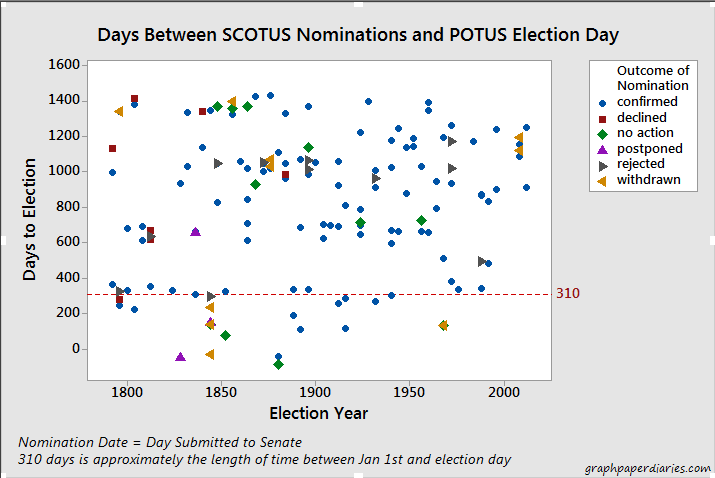
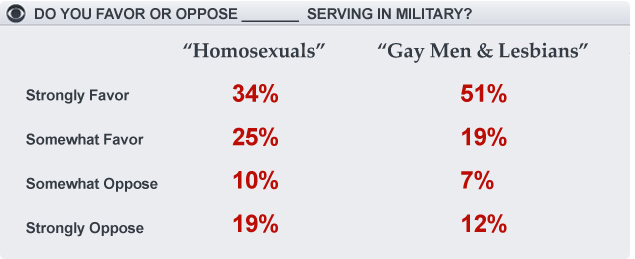
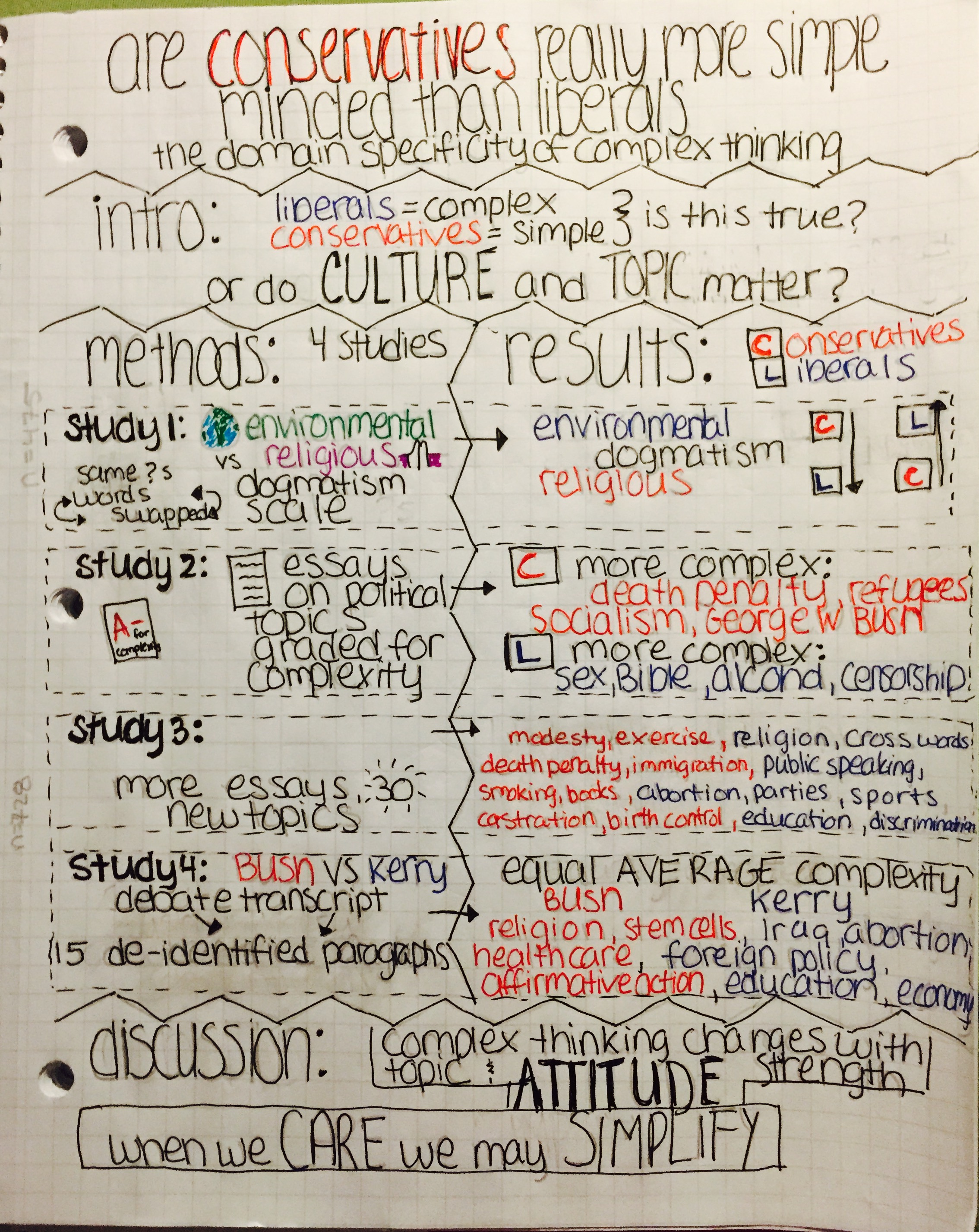
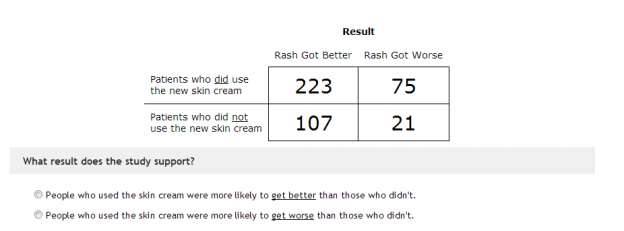
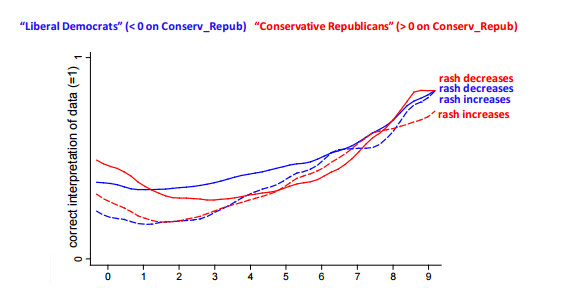
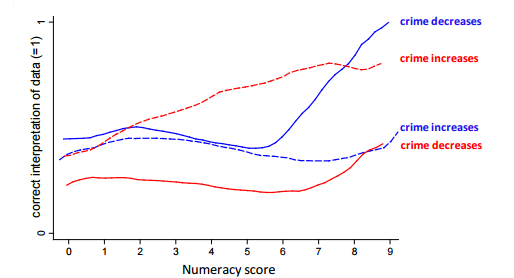
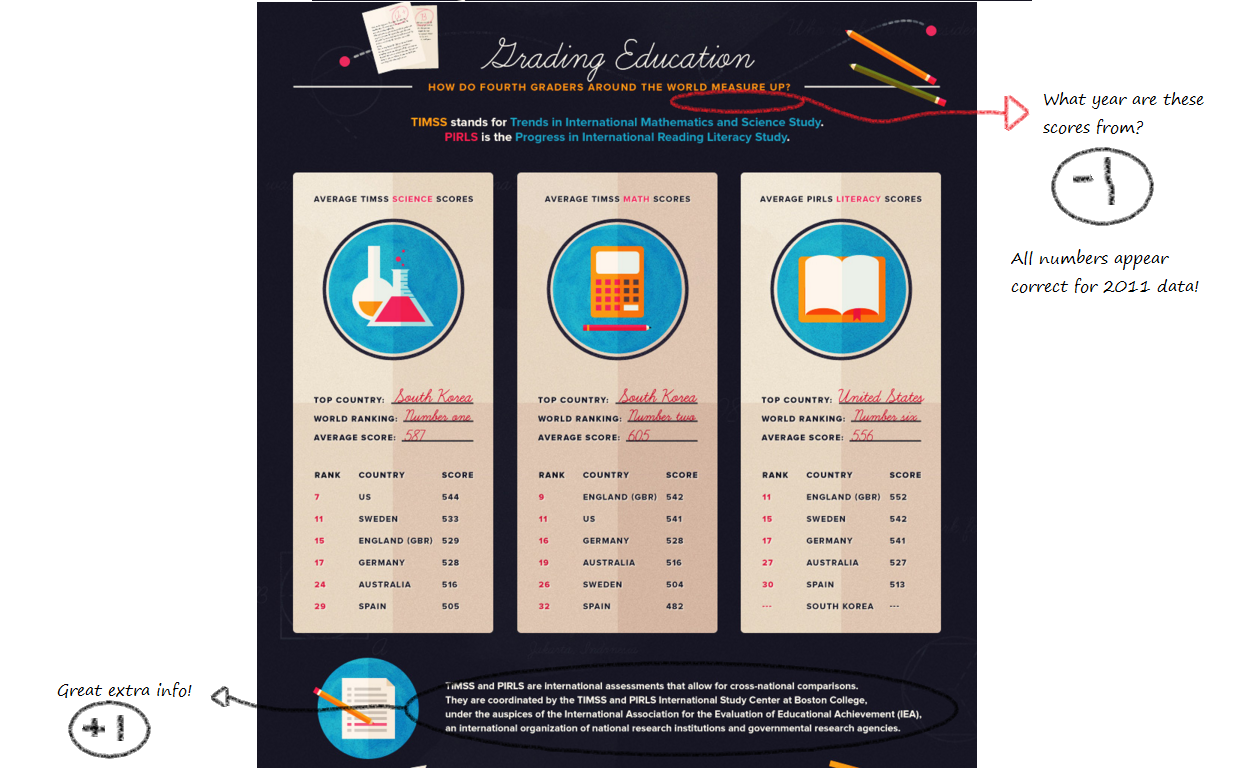
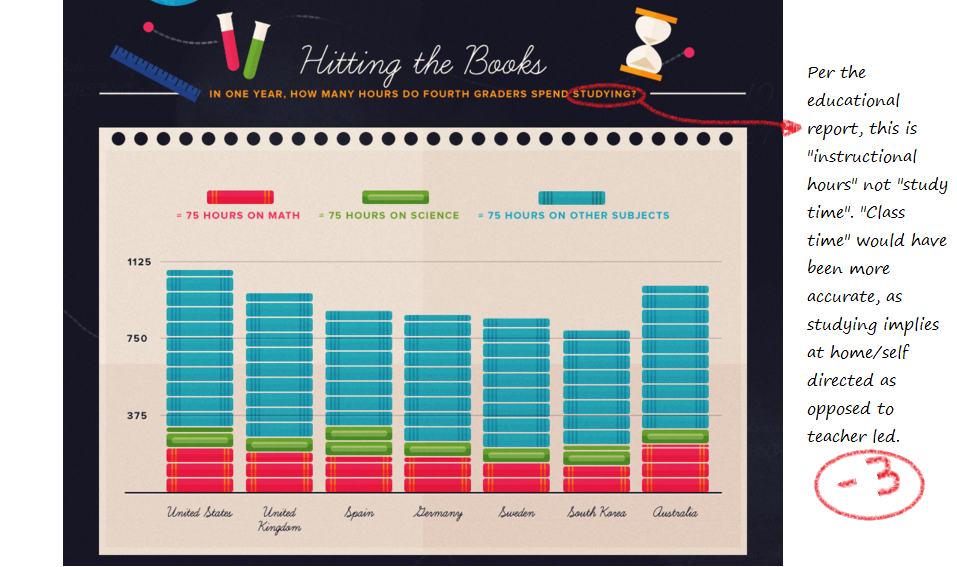
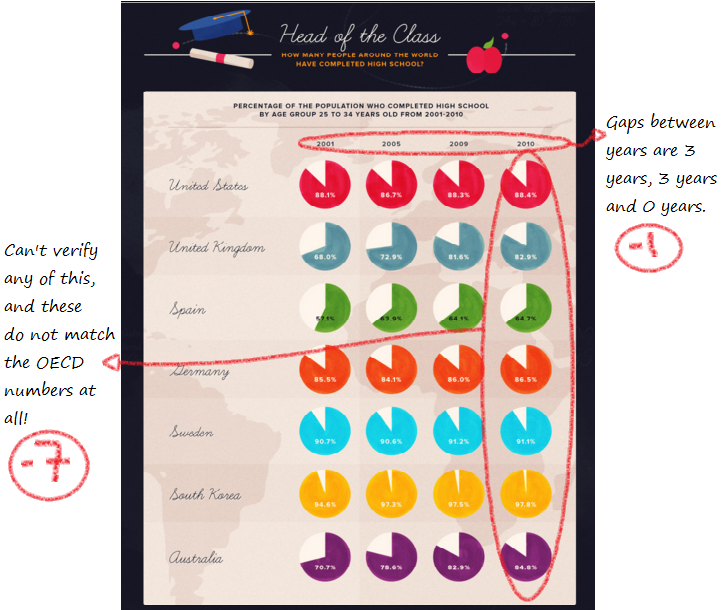
Grade an Infographic: Infographics still drive me nuts. I am taking a red pen to them.

Math Words for People Who Like English: I had a really funny conversation with a language obsessed friend about some of the more fun words that exist in the world of math and statistics. I’m going to be highlighting a few of these for her and anyone else who is interested.

Book Suggestions for the Autodidact: I put up a few book lists recently, and I decided I’m going to keep a running list of my favorites for people who want more. You can find it in the bar at the top, or access the ongoing list here. I’ll be changing the number in the title as I add things.

Additionally, I’m going to keep up my R&C posts, where I deep dive/sketch out the different parts of a study either related to my life or the news, and probably keep up the personal life advice column, which keeps cracking me up. As I noted last week, reader questions are always welcome, and can be submitted here.

Proof: Using Facts to Deceive (Part 6)

Note: This is part 6 in a series for high school students about reading and interpreting science on the internet. Read the intro and get the index here, or go back to part 5 here.

Okay, I’ll be honest here: this part is one of the hardest parts of my talk to cover. The issue I’m going to talk about here is another framing issue, and it has to do with what experts get quoted on what issues and in what proportions. This is a huge issue open to broad interpretations and many legitimate approaches, so I’m going to intentionally tread lightly here.  A large amount about what you feel is deceptive here will depend on what you already believe.  Additionally, when I cover this in the classroom, I have a pretty good idea that there won’t be any raging conspiracy theorists seating in the seats.  Not so on the internet. I’ve been blogging off and on for about a decade now, and you would not believe how many people do key word searches so they can pop in and spew their theories….so forgive me if I speak in generalities. Oh yes, it’s the controversial issue of:

Experts and Balance

Okay, so what’s the problem here?

The problem, in general, is a public misunderstanding about how science works. Not everyone is a scientist, and that’s okay. We often rely on experts to interpret information for us. This is also okay. In the age of the internet though, almost anyone can find an expert or two to back up their own view. Everyone wants to be the first to break a story, and much can get lost in the rush to be on top of the latest and greatest thing. Like, you know, evidence.

Okay, so what kinds of things should we be looking out for?

Well, there are two sides to this coin. The classic logical fallacy here is argumentum ad verecundiam, or “argument from authority”.  Kinda like this guy:

…though my three year old tells me he’s pretty cool.  In all seriousness though, “TV doctors” love to get up and use their credentials to emphasize their points. Their reach can be enormous, but research has found that over half the claims of people like Dr Oz are either totally unsubstantiated or flat out contradicted by the evidence. Just because someone has a certain set of credentials doesn’t mean they’re always right.


So if the popular credentialed people aren’t always right, then good old common sense can guide us right? No, sadly, that’s not true either. The flip side of arguing from authority is “appeal to the common man”, where you respect someone’s opinion because they’re not an authority. For medicine you frequently hear this as “the secret doctors don’t want you to know!” or “my doctor said my child was ______, but as a mother my heart knew that was wrong” (side note: remember that mother’s who turn out to be wrong almost never get interviewed). For some people, this type of argument is even stronger than the one above….but that doesn’t mean it’s not fallacious.

So basically, the water gets really murky because almost anyone can claim to know stuff, cant throw out credentials that may or may not be valid or relevant, can throw out research that may or may not be valid, and otherwise sound very compelling. Yeesh.

Complicating matters even further is the idea of balance and false balance. Balance is when a reporter/news cast presents two opposing sides and gives them both time to state their case. False balance is when you give two wildly unequal sides the same amount of time.

All of this can seem pretty reasonable when it comes to hotly debated topics, like say, nutrition and what we should be eating. If you want to pit the FDA vs Gary Taubes vs Carbsane, I will watch the heck out of that. But there are other issues where the debate gets a little harrier, and the stakes get much higher….like say criminal trials. Do you want a psychic on the stand getting time to explain why they think you’re a murderer? Do you want them getting as much time as the forensics experts who say you aren’t?

At some point we have to say it….science does back up certain opinions more than others, and some experts are more reliable than others. Where you draw the line, sadly, probably depends on what you already believe about the topic.

Why do we fall for this stuff?

Well, partially because we should.  On the whole, experts are probably a pretty good bet when it comes to most scientific matters. They may be wrong at times (just ask Barry Marshall), but I have a lot of faith in science on the whole to move forward and self correct. The scientific process is quite literally mans attempt to correct for all of our fallacies in order to move forward based on reality.  It’s a lofty goal, and we’re not always perfect, but it’s start. We listen to experts because as people with more training, more experience and more context than us actually do frequently do better at controlling their biases.

On the other hand, those of us who have been burned might start to love the anti-hero instead. The idea that a lone wolf can take on the establishment is so cool! Because truthfully sometimes the establishment sucks. People are misdiagnosed, treated rudely, and otherwise incorrectly cast aside. Sometimes “crazy” ideas do turn out to be right. Being a contrarian isn’t always the worst way to go….as my favorite George Bernard Shaw quote says “The reasonable man adapts himself to the world; the unreasonable one persists in trying to adapt the world to himself. Therefore all progress depends on the unreasonable man.”  Every progress maker is a bit unreasonable at times.

So what can we do about it?

So I may have made it sound like it’s not possible to know anything. That’s not true. Science is awesome, but you have to do a little work to figure out what’s going on. So if you really care about an issue, do a little homework. Read the best and brightest minds that defend the side you don’t agree with. Don’t just read what your side says the other side is saying, read the other side. Read the best of what they have to offer….but check their sources. If they prove to be not-credible on one topic, treat them with suspicion going forward. Scientists should not have to play fast and loose with the truth to get where they need to go. Be suspicious of anyone who does this. Beware of anything that sounds too neat, too clean, too cutting edge. Science and proof move slowly.

Also, follow the money….but remember that works both ways. I work in oncology and there are people who will tell you the treatments we offer are crap and that they have better ones. Evidence to the contrary is dismissed as us not wanting to lose our money. However, the people making these claims frequently make 10 to 20 times what our doctors make. They throw out numbers that represent our whole hospital, while neglecting to mention that their personal income far exceeds any individual employee we have. People make tons of money peddling alternatives.

And if all else fails, just ask a math teacher:

No one’s questioning that a2 + b2 = c2 stuff. Well, except this guy.

Alright, that’s it for part 6….see you next week for part 7!  Read Part 7 here.

Immigration, Poverty and Gumballs

A long time reader (hi David!) forwarded this video and asked what I thought of it:

It’s pretty short, but if you don’t feel like watching it, essentially it’s a video put out by a group attempting to address whether or not immigration to the US can reduce global poverty.  He uses gumballs to represent the population of people in the world living in poverty (one gumball = one million people), and ultimately concludes that immigration will not solves global poverty.

Now, I’m not the most educated of people when it comes to immigration issues, but I was intrigued by his math based demonstration. At one point he even has gumballs fall all over the floor, which drives home exactly how screwed we are when it comes to fixing global poverty. But do I buy it? Are the underlying facts correct? Is this a good video? Well, lets take a look:

First, some context: Context is frequently missing on Facebook, and it can be useful to know the background of what you’re seeing when there’s a video like this.  I did some digging, so here goes:  The man in the video is Roy Beck, who founded a group called Numbers USA, website here. Their tag line is “for lower immigration levels”, and unsurprisingly, that’s what they want.  The video, and presumably the numbers in it, are from 2010.  I thought the name NumbersUSA sounded ambitious, but I did find they have an “Accuracy Guarantee” on their FAQ page promising they would take down any inaccurate numbers or information. I don’t know if they do it (and they have not responded to my complaint yet), but that was cool to see.

Now, the argument:  To start the video, Mr Beck lays out his argument by quantifying the number of desperately poor people in the world. He clarifies that “desperately poor” is defined by the World Bank standard of “making less than two dollars a day”. He begins to name the number of desperately poor people in various regions of the world, and stacks gumballs to represent all of these regions. The number is heartbreakingly high and it worsens as he continues….but when his conclusion came to about half the globe (3 billion people or 8 larger containers of gumballs) living at that level, I was skeptical. I’ve done some reading on extreme poverty, and I didn’t think it was that high. Well, it turns out it isn’t. It’s actually about 12.7% or 890 million. That’s only about 30% of the number he presents….maybe about 3 containers of gumballs instead of 8.

Given that that the video was older (and that extreme world poverty has been declining since the 1980s) I was trying to figure out what happened, so I went to this nifty visualization tool the World Bank provides. You can set the poverty level (less than $1.90/day or less than $3.10/day) and you can filter by country or region.  Not one of the numbers given is accurate. They haven’t even been accurate recently, as far as I can tell. For example, in 2010, China had 150 million people living on under $2/day.  In the video, he says 480 million, where China was in the year 2000 or so.  For India, he uses 890 million, a number I can’t find ever published by the World Bank.  The highest number they list for India at all is 430 million. The best I can conclude is that the numbers he shows here are actually those living under the $3.10/day level, which seem closer. Now $3.10/day is not rich by any means, but it’s not what he asserted either. He emphasizes the “less than 2 dollars a day” point multiple times.  At that point I figured I wasn’t going to check out the rest of the numbers….if the baseline isn’t accurate, anything he adds to it won’t be either. [Edit: It’s been pointed out to me that at the 2:04 mark he changes from using the $2/day standard to “poorer than Mexico”, so it’s possible the numbers after that timepoint do actually work better than I thought they would. It’s hard to tell without him giving a firm number. For reference, it looks like in 2016 the average income in Mexico is $12,800/year .]  It was at this point I decided to email the accuracy check on his website to ask for clarification, and will update if I hear back. I am truly interested in what happened here, because I did find a few websites that gave similar numbers to his….but they all cite the World Bank and all the links are now broken. The World Bank itself does not appear to currently stand by those statistics.

So did this matter? Well, yes and no. His basic argument is that we have 5.6 billion poor people. That grows every year by 80 million people each year. Subtract out 1 million immigrants to the US each year, and you’re not making a difference.  Even if those numbers are wildly different from what’s presented, the fundamental “1 million immigrants doesn’t make much of a dent in world poverty” probably stands.

But is that the question?

On the one hand, I’ll grant that it’s possible “some people say that mass immigration in to the United States can help reduce world poverty”, as he says to open his video. I do not engage much in immigration debates, but I wasn’t entirely sure that “reduce world poverty” was the primary argument. NumbersUSA puts out quite a few videos on many different topics, so it’s interesting that this one appears to be their most viral.  It currently has almost 3 million views, and most of their other videos don’t have even 1% of that. Given that “solve world poverty” is not one of the stated goals or arguments of the immigration organizations I could find, why was this so shared? I did find some evidence that people argue about immigrants sending money back to their home countries helping poverty, but that is not really addressed in this video. So why did so many people want to debunk an argument that is not the primary one being made?

My guess is the pretty demonstration. I covered in this post about graphs and technical pictures, that these sorts of additions seem to make us think an argument is more powerful than we would have otherwise. In this case, it seems a well demonstrated about magnitude and subtraction is trumping most people’s realizations that this is not arguing a point that is commonly made.

Now if the numbers aren’t accurate, that’s even more irritating (his demonstration would not have looked quite as good if it had 3 containers at the start instead of 8), but I’m not sure that’s really the point. These videos work in two ways, both by making an argument that will irritate people who disagree with you, and by convincing those who agree with you that you’ve answered the challenges you’ve gotten. It’s a classic example of a straw man…setting up an argument you can knock down easily. My suspicion is when you do it with math and a colorful demonstration, it convinces people even more. Not the fault so much of the video maker, as that of the consumer.  While it’s possible Mr Beck will reply to me and clarify his numbers with a better source, it looks unlikely. Caveat emptor.

Got a question/meme/thing you want explained or investigated? I’m on it! Submit them here.

New Feature: Reader Questions

I’m starting a new feature here that I’ve been doing informally for a while now: reader questions. While I like to amuse myself with my stats based/personal life advice column, I get far more requests for feedback on random things readers come across and want someone to weigh in on.  So….if you have a question, see something irritating on Facebook, or just generally want someone to take a look at the numbers, get in touch here.

Proof: Using Facts to Deceive (Part 5)

Note: This is part 5 in a series for high school students about reading and interpreting science on the internet. Read the intro and get the index here, or go back to part 4 here.

Okay! So we’re almost half way done with the series, and we’re finally reaching the article!  Huzzah! It may seem like overkill to spend this much time talking about articles without, you know, talking about the articles, but the sad truth is by the time you’ve read the headline and looked at the picture, a huge amount of your opinion will already be forming. For this next section, we’re going to talk about the next thing that will probably be presented to you: a compelling anecdote. That’s why I’m calling this section:

The Anecdote Effect

Okay, so what’s the problem here?

The problem here isn’t really a problem, but a fundamental part of human nature that journalists have known for just about forever: we like stories. Since our ancestors gathered around fires, we have always used stories to illustrate and emphasize our points. Anyone who has even taken high school journalism has been taught something like this. I Googled “how to write an article”, and this was one of the first images that came up:

Check out that point #2 “Use drama, emotion, quotations, rhetorical questions, descriptions, allusions, alliteration and metaphors”. That’s how journalists are being taught to reel you in, and that’s what they do. It’s not necessarily a problem, but a story is designed to set your impressions from the get go.  That’s not always bad (and pretty much ubiquitous) but it is difficult when it leaves you with an impression that the numbers are different than they actually are.

What should we be looking out for?

Repeat after me: the plural of anecdote is not data.

From smbc.com

Article writers want you to believe that the problem they are addressing is big and important, and they will do everything in their power to make sure that their opening paragraph leaves you with that impression. This is not a bad thing in and of itself (otherwise how would any lesser known disease or problem get traction?), but it can be abused.  Stories can leave you with an exaggerated impression of the problem, and exaggerated impression of the solution, or an association between two things that aren’t actually related.  If you look hard enough, you can find a story that backs up almost any point you’re trying to make.  Even something with a one in a million chance happens 320 times a day in the US alone.

So don’t take one story as evidence. It could be chance. They could be lying, exaggerating, or mis-remembering.  I mean, I bet I could find a Mainer who could tell me a very sad story about how their wife changing their shopping habits to less processed food led to their divorce.  I could even include this graph with it:

chart

Source.  None of this however, would mean that margarine consumption was actually driving divorce rates in any way.

Why do we fall for this stuff?

Nassim Taleb has dubbed this whole issue “the narrative fallacy”, the idea that if you can  tell a story about something, you can understand it. Stories allow us to tie a nice bow around things and see causes and effects where they don’t really exist.

Additionally, we tend to approach stories differently than we approach statistics. One of the most interesting meditations on the subject is from John Allen Paulos in the New York Times here. He has a great quote about this:

In listening to stories we tend to suspend disbelief in order to be entertained, whereas in evaluating statistics we generally have an opposite inclination to suspend belief in order not to be beguiled.

I think that sums it up.

So what can we do about it?

First and foremost, always remember that story or statistic that opens an article is ultimately trying to sell you something, even if that something is just the story itself.  Tyler Cowen’s theory is that the more you like the story, the more you should distrust it.

Even under the best of circumstances, people can’t always be trusted to accurately interpret events in their own life:

Source.

Of course, this almost always works the opposite way. People can be very convinced that the Tupperware they used while pregnant caused their child’s behavior problems, but that doesn’t make it true. Correlation does not prove causation in even a large data set, and especially not when it’s just one story.

It also helps to be aware of words that are used, and to think about the numbers behind them. Words like “doubled” can mean a large increase, or that your chances went from 1 in 1,000,000,000 to 1 in 500,000,000. Every time you hear a numbers word, ask what the underlying number was first.  This isn’t always nefarious, but it’s worth paying attention to.

One final thing with anecdotes: it’s an unfortunate fact of life that not everyone is honest. Even journalists with fact checkers and large budget can totally screw up when presented with a sympathetic sounding source. This week, I had the bizarre experience of seeing a YouTube video of a former patient whose case several coworkers worked on. She was eventually “cured” by some alternative medicine, and has taken to YouTube to tell her story.  Not. One. Part. Of. What. She. Said. Was. True. I am legally prohibited from even pointing you in her direction, but I was actually stunned at the level of dishonesty she showed. She lied about her diagnosis, prognosis and everything in between. I had always suspected that many of these anecdotes were exaggerated, but it was jarring to see someone flat out lie so completely. I do believe that most issues with stories are more innocent than that, but don’t ever rule out “they are making it up”, especially in the more random corners of the internet.

By the way, at this point in the actual talk, I have a bit of break the fourth wall moment. I point out that I’ve been using the “tell a story to make your point” trick for nearly every part of this talk, and that they are most certainly appreciating it more than if I just came in with charts and equations. The more astute students are probably already thinking this, and if they’re not thinking it, it’s good to point out how it immediately relates.

Until next week!  Read Part 6 here.

5 Statistics Books You Should Read

Since I’m on a bit of a book list kick at the moment, I thought I’d put together my list of the top 5 stats and critical thinking books people should read if they’re looking to go a bit more in depth with any of these topics.  Here they are, in no particular order:

If you’re looking for….a good overview:
How to Lie with Statistics

This is one of those books that should be given to every high school senior, or maybe even earlier. In fact, I know more than a few people who give this out as a gift. It’s 60 years old, but it still packs a punch. It’s written by a journalist, not a statistician, so it’s definitely for the layperson.

If you’re looking for….something a bit more in depth:
Thinking Statistically

If you want to know how to think about statistical concepts without actually having to do any math, this book is for you. What I would get my philosophy major brother for Christmas so we could actually talk about things I’m interested in for once.

If you’re looking for….something a little more medical:
Bad Science: Quacks, Hacks, and Big Pharma Flacks

Ben Goldacre is a doctor from the UK, so it’s no surprise he focuses mostly on bad interpretations of medical data.  He calls out journalists, popular science writers and all sorts of other folks in the process though, and helps consumers be more educated about what’s really going on.

If you’re looking for….something that will actually help you pass a class:
The Cartoon Guide to Statistics

Not a very advanced class, but a pretty solid re-explaining of stats 101. I keep this one at work and hand it out when people have basic questions or want to brush up on things.

If you’re looking for….a handy guide for those who actually get stats:
Statistical Rules of Thumb

This is one of the few textbooks I actually bought just to have on hand and to flip through for fun. It’s pricey compared to a regular book, but worth it if you’re using statistics a lot and need a in depth reference book. It contains all those “real world” reminders that statisticians can forget if they’re not paying attention. With different sections for basics, observational studies, medicine, etc, and advice like “beware linear models” and “never use a pie chart”, this is my current favorite book.

As always,  further recommendations welcome!

Pictures: Trying to Distract You (Part 4)

Note: This is part 4 in a series for high school students about reading and interpreting science on the internet. Read the intro and get the index here, or go back to part 3 here.

When last we met, we covered what I referred to as “narrative pictures”, or pictures that were being used to add to the narrative part of the story.  In this section, we’re going to start looking at pictures where the problems are more technical in nature…ie graphs and sizing. This is really a blend of a picture problem and a proof problem, because these deceptions are using numbers not narratives.   Since most of these issues are a problem of scales or size, I’m calling this section:

Graphs: Changing the View

Okay, so what’s the problem here?

The problem, once again, is a little bit of marketing. Have you ever judged the quality of a company based on how slick their website looks? Or judged a book by it’s cover, to coin a phrase? Well, it turns out we’re very similar when it comes to judging science. In a 2014 study, (Update: this lab that performed this study has come under review for some questionable data practices. It is not clear if this study is affected, but you can read the details of the accusations here and here) researchers gave people two articles on the effectiveness of a made up drug. The text of both articles was the same, but one had a graph that showed the number of people the drug helped, the other did not.  Surprisingly, 97% of the people who saw the graph believed the drug worked, whereas only 68% of people who read the text did. The researchers did a couple of other experiments, and basically found that not just graphs, but ANY “science-ish” pictures (chemical formulas, etc) influenced what people thought of the results.

So basically, adding graphs or other “technical” pictures to things to lend credibility to their articles or infographic, and you need to watch out.

Okay, so what kind of things should we be looking out for?

Well, in many cases, this isn’t a really a problem. Graphs or charts that reiterate the point of the article are not necessarily bad, but they will influence your perception. If the data warrants it, a chart reiterating the point is fantastic. It’s how nearly every scientific paper written operates, and it’s not inherently deceptive….but you may want to be aware that these pictures by themselves will influence your perception of the data. Not necessarily a problem, but good to be aware of under any circumstance.

There are some case though, where the graph is a little trickier.  Let’s go through a few:

Here’s one from Jamie Bernstein over at Skepchick, who showed this great example in a Bad Chart Thurday post:pica

Issue: The graph y-axis shows percent of growth, not absolute value. This makes hospitalized pica cases look several times larger than anorexia or bulimia cases. In reality, hospitalized anorexia cases are 5 times as common and bulimia cases are 3 times as common as pica cases. These numbers are given at the bottom, but the graph itself could be tricky if you don’t read it carefully.

How about this screen shot from Fox News, found here?

 Issue: Visually, this chart shows the tax rate will quadruple or quintuple if the Bush tax cuts aren’t extended. If the axis started at zero however, the first bar would be about 90% the size of the second one.

How about this tweeted graph from shared by the National Review?

Issue: The problem with this one is the axis does start with zero. The Huffington Post did a good cover of this graph here, along with what some other graphs would look like if you set the scale that large. Now of course there can be legitimate discussion over where a fair axis scale would be, but you should make sure the visual matches the numbers.

And one more example that combines two issues in one:

See those little gas pumps right there? They’ve got two issues going on. The first is a start date that had an unusually low gas price:

gas

The infographic implies that Obama sent gas prices through the roof….but as we can see gas prices were actually bizarrely low the day he took office.  Additionally, the gas pumps involved are deceptive:

b1fb2-gas

If you look, they’re claiming to show that prices doubled. However, the actual size of the second one is four times the one of the first one.  They doubled the height and the width:

76fed-gas2

While I used a lot of political examples here, this isn’t limited to politics. Andrew Gelman caught the CDC doing it here, and even he couldn’t figure out why they’d have mucked with the axis.

There’s lots of repositories for these, and Buzzfeed even did a listicle here if you want more. It’s fun stuff.

Why do we fall for this stuff?

Well, as we’ve said before, visual information can reinforce or skews your perceptions, and visual information with numbers can intensify that effect. This isn’t always a bad thing…after all nearly every scientific paper ever published includes charts and graphs. When you’re reading for fun though, it’s easy to let these things slip by. If you’re trying to process text, numbers, implications AND read the x and y axis and make sure the numbers are fairly portrayed, it can be a challenge.

So what can we do about it?

A few years ago, I asked a very smart colleague how he was able to read and understand so many research papers so quickly. He seemed to read and retain a ton of highly technical literature, while I always found my attention drifting and would miss things. His advice was simple: start with the graphs. See I would always try to read papers from start to finish, looking at graphs when they were cited. He suggested using the graphs to get a sense of the paper, then read the paper with an eye towards explaining the graphs. I still do this, even when I’m reading for fun. If there’s a graph, I look at it first when I know nothing, then read the article to see if my questions about it get answered. It’s easier to notice discrepancies this way. At the very least, it reminds you that the graph should be there to help you. Any evidence that it’s not should make you suspicious of the whole article and the author’s agenda.

So that wraps up our part on Pictures! In part 5, we’ll finally reach the text of the article.

Read Part 5 here.

Math Books for Young Kids

After my post of my own new years resolution reading, I thought it might be interesting to follow up with a couple of new books I got my son for Christmas.  He’s 3 and has officially moved from merely being able to recite numbers to actually being able to count objects.  While obviously he’s a bit young for statistics, I want to get him introduced to the world of math and some of the people who inhabit it early. Relatedly, here’s a nifty math skills/developmental chart I found for early childhood.

These are some of the books I’m using:

Bedtime Math: This Time It’s Personal (Bedtime Math Series Book 2)
This one we started using immediately, and it’s quite fun. Basically this is a four book series, created by a mom who realized that while kids get introduced to reading in a fun environment (home, in a parents lap before bed) they get introduced to math in a much less fun setting (later in a classroom). She decided to fix that by putting out books of funny math problems kids could do at home before bed. It has problems for several age groups, starting at around 3. Very fun, and a nice balance for traditional bed time routines.

Curious George Learns to Count from 1 to 100
This one is a big favorite, though we don’t make it quite to 100 yet. Curious George is my son’s hero right now, so I figured I’d use it to encourage him to go further in his counting.

The Boy Who Loved Math: The Improbable Life of Paul Erdos
I’ve mentioned my own obsession with Paul Erdos, and I’m trying to pass it on. Erdos apparently would call children “epsilons”, but Finn doesn’t seem to be taking to that name. This one’s a little long for a 3 year old, but it’s interesting and the illustrations are amazing.

Blockhead: The Life of Fibonacci
This one was recommended to me by my favorite children’s librarian (hi Tracy!). It’s about Fibonacci and is another one that’s slightly too long for a 3 year old, but interesting and historically enlightening. Mathematicians tend to be really fascinating people.

Introductory Calculus For Infants
Because it’s never too early to start.

Experimenting with Babies: 50 Amazing Science Projects You Can Perform on Your Kid
This one’s for mama.


Pictures: How They Try to Distract You (Part 3)

Note: This is part 3 in a series for high school students about reading and interpreting science on the internet. Read the intro and get the index here, or go back to part 2 here.

As any good internet person knows, you can’t have a good story without a featured image…pictures being worth a thousand words and all that jazz. Nine times out of ten if you see a story pop up on Facebook, it’s going to have an image attached.  Those deceptive and possibly false memes I was talking about in Part 1? All basically words on images. For most stories, there are really two different types of images: graphs or technical images and what I’m going to call “narrative” images.  In this section I’m going to cover the narrative images or what I call:

Narrative Images: Framing the Story

Okay, so what’s the problem here?

In Part 2 I mentioned a study that was mostly about headlines, but that had a really interesting point about pictures as well. In that study, they purposefully mismatched the headline and the picture in a story about a crime. Basically they had the headline read something like “Father of two murdered” and showed a picture of the criminal, or they had it read “Local man murders father of two” and showed a picture of the victim. Later, people who had read a “victim” headline with a picture of a murderer actually felt more sympathy towards the murderer, and those who read a “criminal” headline with a picture of a victim liked the victim less. That’s the power of pictures. We know this, which is why newspapers can end up getting sued for putting the wrong picture on a cover even if they don’t mention any names.

Any picture used to frame a story will potentially end up influencing how we remember that story. A few weeks ago, there was a big kerfluffle over some student protests at Oberlin. The NY Post decided to run the story with a picture of Lena Dunham, an alum of the college who is in no way connected to the protests. In a couple of months, my bet is a good number of people who read that story will end up remembering that she had something to do with all this.

What should we be looking out for?

When you read an article, at the very least you should ask how the picture matches the story. Most of the time this will be innocuous, but don’t forget for a minute the picture is part of an attempt to frame whatever the person is saying.  This can be deviously subtle too.  One of the worst examples I ever heard of was pointed out by Scott Alexander after a story about drug testing welfare recipients hit the news.  The story came with lots of headline/picture combos like this one from Jezebel:

Drugtesting

Now check that out! Only .2% of welfare applicants failed a drug screening! That’s awesome.  But what Scott Alexander pointed out in that link up there is that urine drug testing actually has a false positive rate higher than .2%.  This means if you tested a thousand people that you knew weren’t on drugs, you’d get more than a .2% failure rate.  So what happened here? How’d it get so low?

The answer lies in that technically-not-inaccurate word “screening”.  Once you saw that picture, your brain probably filled in immediately what “screening” meant, and it conjured up a picture of a bunch of people taking a urine drug test. The problem is, that’s not what happened. The actual drug screening used here was a written drug screening. That’s what those people failed, and that’s why we didn’t get a whole bunch of false positives.  Now I have no idea if the author did this on purpose or not, but it certainly leaves people with a much different impression than the reality.

Why do we fall for this stuff?

Every time we see a picture, we’re processing information with a slightly different part of our brain. In the best case scenario, this enhances our understanding of information and engages us more fully. In the worse case scenario, it skews our memory of written information, like in the murderer/victim study I mentioned above. This actually works in both directions….asking people questions with bad verbal information can skew their visual memory of events.  Even people who are quite adept at interpreting numbers, words and data can forget to consider the picture attached.

So what can we do about it?

Awareness is key. Any time you see a picture, you have to think “what is this trying to get me to think?”  You have to remember that we are visual creatures, and if text worked better than visuals commercials wouldn’t look the way they do.

Now, before I go, I have to say a few words about infographics. These terrible things are an attempt to take entire topic and make them in to nothing but a narrative photo. They suck. I hate them. Everything I say in this entire series can be assumed to go TRIPLE for infographics. Every time you see an infographic, you should remember that 95% of them are inaccurate. I just made that up, but if you keep that rule in mind you’ll never be caught off guard. Think Brilliant has the problem summed up very nicely with this very meta infographic about the problem with infographics:

Think Brilliant has more here.

The key with infographics is much like those little picture memes that are everywhere: consider them wrong at baseline, and only trust after verifying.

If you want more, read Part 4 here.

New Year’s Resolution: Book List

Happy New Year!

Man, it’s 2016. Where does the time go?  As we head in to 12 fresh and beautiful new months, I thought I’d take a moment to share the stats/math/science books I plan on reading in the coming year1. Some of these are books I’ve bought and been letting sit, and some are books I plan to get in the near future with the awesome Amazon gift cards I got for Christmas. If I get really ambitious, I may even put up book reviews of some of these when I’m done. I’ve also been toying with doing some sort of master stats/critical thinking book list like the Personal MBA2 list, so please add any suggestions.

January: The Ghost Map: The Story of London’s Most Terrifying Epidemic–and How It Changed Science, Cities, and the Modern World

I’m taking a Epidemiology stats class in January, and this book has been highly recommended by my science teacher brother as a compelling story of how the field got started.

February:The Man Who Loved Only Numbers: The Story of Paul Erdos and the Search for Mathematical Truth

How better to recognize Valentine’s Day than to read a book about a man who loved nothing but numbers? I’ve been a little obsessed with Erdos for a while now (I even got my three year old this book for Christmas), but I haven’t yet read this one.

March: Guesstimation: Solving the World’s Problems on the Back of a Cocktail Napkin

I’ve had this one half finished on my bookshelf for so long they came out with a second edition. I’ll probably just finish the one I have.

April: Understanding Sabermetrics: An Introduction to the Science of Baseball Statistics

Another one that’s been sitting on my shelf for a while….and what better month to read about stats and baseball?

May: What is a p-value anyway? 34 Stories to Help You Actually Understand Statistics

I’m always looking for new ways of explaining stats, and there’s some very cool narrative textbooks out there I’ve got my eye on to improve my repertoire. This is one of them.

June: Beautiful Data: The Stories Behind Elegant Data Solutions

Another one I’ve half finished, but June seems like a good time to read a book about beautiful things.

July: The Signal and the Noise: Why So Many Predictions Fail-but Some Don’t

A Christmas gift from a few years back I’ve severely neglected, but need to read before we actually get to the next election.

August: Teaching Statistics: A Bag of Tricks

I’ve admired Gelman’s work for a while (he has a great website here), and I’d be interested to see how he approaches teaching statistics to students.

September: In Pursuit of the Unknown: 17 Equations That Changed the World

I started this one, but I put this one down because of a busy semester, so I’ll try to get it in right at the beginning. It gives the history of some of the world’s most interesting and useful equations, their development, and how they’ve influenced the world. An interesting historical take on mathematical development.

October: Statistics Done Wrong: The Woefully Complete Guide

Just in time for Halloween, something scary.

November: The Joy of x: A Guided Tour of Math, from One to Infinity

Another interesting looking narrative about math book.

December: The Lady Tasting Tea: How Statistics Revolutionized Science in the Twentieth Century

Looks like a fun read for the end of a semester.


Any others you’d recommend?

1. All book links are Amazon affiliate links. Glad we had this talk. See ya out there.
2. I love that site, because I really like the idea of getting a somewhat functional education just from books. Obviously no one can become a statistician just from reading books, but most people can get a really good grasp on most of what they need to know. This may be my real resolution for 2016…to get a 99 book list of statistics and math books from different subcategories. So, um, recommendations welcome.