Take Your Best Guess

The AVI passed on an interesting post about a new study that replicates the finding that many psychological studies don’t replicate. Using 21 fairly randomly selected studies (chosen specifically to avoid being too sensational…these were supposed to be run of the mill), replication efforts showed that about 60% of studies held up while almost 40% could not be replicated.

This is a good an interesting finding, but what’s even more interesting is that they allowed people to place bets ahead of time on exactly which studies they thought would fail and which ones would bear out. Some of the people were other psych researchers, and some were placing bets for money. Turns out that everyone was pretty darn good at guessing which findings would replicate:

Consistently, studies that failed to replicate had fewer people guessing they would replicate. In fact, most people were able to guess correctly on at least 17 or 18 out of the 21.

Want to try your hand at it? The 80,000 hours blog put together a quiz so you can do just that! It gives you the overview of the study finding with an option to read more. about exactly what they found. Since I’m packing up for a work trip this week, I decided not to read any details and just go with my knee jerk guess from the description. I got 18 out of 21:

I encourage you to try it out!

Anyway, this is an interesting finding because quite often when studies fail to replicate, there are outcries of “methodological terrorism” or that the replication efforts “weren’t fair”. As the Put A Number on It blog post points out though, if people can pretty accurately predict which studies are going to fail to replicate, then those complaints are much less valid.

Going forward, I think this would be an interesting addendum to all replication effort studies. It would be an interesting follow up to particularly focus on the studies that were borderline….those that just over 50% of people thought might replicate, but that didn’t end up replicating. It seems like those studies might have the best claim to change the methodology and repeat.

Now go take the quiz, and share your score if you do! The only complaint I had was that the results don’t specifically tell you (I should have written it down) if you were more likely to say a study would replicate when it didn’t or vice versa. It would be an interesting personal data point to know if you’re more prone to Type 1 or Type 2 errors.


Tornadoes in the Middle of America

I was talking to my son (age 6) a few days ago, and was surprised to hear him suddenly state “Mama, I NEVER want to go to the middle of America”. Worried that I had somehow already managed to inadvertently make him in to one of the coastal elite, I had to immediately ask “um, what makes you say that?”. “The middle of America is where tornadoes are, and I don’t want to be near a tornado”, he replied. Oh. Okay then.

Apparently one of his friends at school had started telling him all about tornadoes, and he wanted to know more. Where were most of the tornadoes? Where was the middle of America anyway? And (since I’m headed to Nebraska in a week), what state had the most tornadoes?

We decided to look it up, and the first thing I found on Google image search was this map from US Tornadoes:

Source here. I was surprised to see  the highest  concentration was  in the Alabama/Mississippi area, but then I realized this was tornado warnings, not tornadoes themselves. The post that accompanies the map suggests that the high number of tornado warnings in the Mississippi area is because they have a much longer tornado season there than the Kansas/Oklahoma region that we (or at least I) normally think of as the hotbed for tornadoes.

Areas impacted by tornadoes vary a bit depending on what you’re counting, but this insurance company had a pretty good map of impacted areas here:

Measuring can vary a bit for two reasons: what you count as a tornado, and how you calculate frequency. The National Oceanic and Atmospheric Administration puts out a few different types of numbers: average number of tornadoes, average number of strong to violent tornadoes, tornadoes by state and tornado average per 10,000 square miles. Those last two are basically to help account for states like Texas, which gets hit with more tornadoes than any other state (155 between 1991 and 2010), but mostly because it’s so big. If you correct that to look at a rate over 10,000 square miles, it dips to 5.9….well below Florida (12.2) and Kansas (11.7).

Florida coming in ahead of Kansas surprised me, but this is where strength of tornadoes comes in. Apparently Florida has lots of weak tornadoes. Looking at only strong to violent tornadoes only, we get this:

The NOAA also breaks down risk by month, so I decided to take a look and see what the risk in Nebraska was for September:

I think I can reassure the kiddo that mommy is going to be just fine. Apparently if you want to go to the middle of America but avoid tornadoes, fall is a pretty good bet.

Of course after we got the numbers down, we went to YouTube and started watching storm chaser videos. While he thought those were fascinating, he did have a reassuring number of questions along the lines of “mama, why did the people in the video see the tornado but not run away?”. Good impulse kid. Also, continuing his mother’s habit of rampant anthropomorphizing, he informed me that this video made him “very sad for the trees” (see the 35-40 second mark):


5 Things About the Challenges of Nutritional Epidemiology

Anyone who’s been reading this blog for any amount of time knows that I’m a pretty big fan of the work of John Ioannidis, and that I like writing about the challenges of nutrition research. Thus, you can imagine my excitement when I saw that JAMA had published this opinion piece from him called “The Challenge of Reforming Nutritional Epidemiologic Research“. The whole article is quite good, but for those who don’t feel like wading through it, I thought I’d pull together some of the highlights. Ready? Let’s go!

  1. Everything’s a problem (or maybe just our methods) Ioannidis starts out with an interesting reference to a paper from last year called “Food groups and risk of all-cause mortality: a systematic review and meta-analysis of prospective studies“. This meta-analysis looked at the impact of various food groups on mortality, and reported the significant associations. Ioannidis points out that almost every food they looked at had a statistically significant association with mortality, even at relatively small intakes. Rather than get concerned about any one finding, Ioannidis raises concerns about the ubiquitousness of significant findings. Is every food we eat really raising or lowering our all cause mortality all the time? Or are we using methods that predispose studies to finding things significant?
  2. Reported effect sizes are large aren’t necessarily cumulative The second thing Ioannidis points out is exactly how large the effect sizes are. The study mentioned in point #1 suggests you get  1.7 extra years of life for eating a few extra hazelnuts every day? And that eating bacon every day is worse than smoking? That seems unlikely. The fundamental problem here is that most food consumption is heavily correlated with other types of food consumption, making it really difficult to tease out which foods are helping or hurting. If (hypothetically) vegetables were actually bad for us, but people ate them a lot with fruit (which was good for us) we might come to the conclusion that vegetables were good merely because their consumption was tied to other things. As Ioannidis puts it “Almost all nutritional variables are correlated with one another; thus, if one variable is causally related to health outcomes, many other variables will also yield significant associations in large enough data sets. “
  3. We focus too much on food itself Speaking of confounders, Ioannidis goes on to make another interesting point about how food consumption is always assumed to be beneficial or risky based on properties of the food itself, with potential confounders being ignored. For example, he cites the concern that grilling meat can create carcinogens, and the attempts to disentangle the cooking method from the meat itself. Drinking scalding hot beverages is known to increase the risk for esophageal cancer, separate from what the beverage itself actually is. It’s entirely plausible there are more links like that out there, and entirely plausible that various genetic factors could make associations stronger for some groups than others. Teasing those factors out is going to be extremely challenging.
  4. Publication methods encourage isolation of variables One of the other interesting things Ioannidis points out is that even very large long term studies (such as the nurses health study) tend to spread their results out over hundreds if not thousands of papers. This is a problem that we talked about in the Calling Bullshit class I reviewed: researchers are more rewarded for publishing in volume rather than for the quality of each paper. Thus, it makes sense that each nutrient or food is looked at individually, and headline writers magnify the issue. Unfortunately this makes the claims look artificially strong, and is probably why randomized trials frequently fail to back up the observed claims.
  5. Nutritional epidemiology uniquely impacts the public So what’s so bad about an observational study failing to live up to the hype? Well, nothing, unless clinical recommendations are based on it. Unfortunately, this study found that in 56% of observational studies, the author recommended a change to clinical practice. Only 14% of those recommendations came with a caveat that further studies might be needed to corroborate the findings. This is particularly concerning when you realize that some studies have found that very few observational studies replicate. For example, this one looked at 52 findings from 12 papers, and found that none of them replicated in randomized trials, and 5 actually showed a reverse in correlation. Additionally, headlines do little to emphasize the type of study that was done, leading to a perception that science in general is unreliable. This has long term implications both for our health and for our perception of the scientific method.

Overall I enjoyed the piece, and particularly its link to promising new recommendations to help address these issues. While criticizing nutritional epidemiology has become rather popular, better ways of doing things have been more elusive. Given the level of public interest however, we definitely need more resources going in to this. Given that the NUSI model appears to have failed, new suggestions should be encouraged.

What I’m Reading: September 2018

The news about the fire at the National Museum of Brazil was rather shocking, and I feel even worse about it now that I’ve read this roundup of some of the pieces that were lost in the flames.

Hat tip to Jonathan for sending me this great NPR piece on the school shootings that weren’t. Their reporting found that out of the 238 school shootings that got reported last year, 227 were due to errors filling out the form and 11 were actual shootings. A cautionary tale about what happens when you rely on people filling out online forms to report things like school shootings, and a good example of base rate issues in action.

As a proud member of the Oregon Trail Generation, I really liked this history of the game and why it became so ubiquitous for a certain age group.

In an interesting point/counter-point this week, we have a Vox article that explains how Alexandria Ocasio-Cortez is getting unfair amounts of criticism for her errors because she’s a young female, and this Washington Examiner piece points out that much of their criticism of the criticism is just wrong. For example, the Vox piece points to several incorrect statements Paul Ryan has made, then says “No one saw these statements and said Ryan is unfit to serve in Congress. No one told him to go put training wheels back on. No one told him he wasn’t ready for primetime.” The Washington Examiner piece points out that there’s an anti-Ryan super PAC named “Unfit to Serve“,  2 years ago Nancy Pelosi actually released a long fact check of Ryan that started with the phrase “time to take the training wheels off!“, and in 2012 Obama’s re-election campaign released a statement saying Ryan was “not ready for prime time“. Oops. Now regardless of your opinion of Ocasio-Cortez or Paul Ryan, this is a good moment to remember the Tim Tebow Effect. Paul Ryan’s approval rating has never been above 48%, and the last numbers I can find suggest it’s closer to 34% or so now, with 46% of the population viewing him unfavorably. He was also popular enough to be named speaker of the house. Neither liking him nor disliking him is an underrepresented viewpoint. Ocasio-Cortez has been called “the future of the Democratic Party” by the DNC chair, and roundly criticized by many others, as the original Vox article points out. She has no approval rating polls I can find (likely since she currently holds no office). In other words, if you’re going to claim “no one is criticizing” either of these people, you may want to Google a bit first. Otherwise you’ll be wandering in to premature expostulation territory pretty quickly.

Somewhat related: a new paper on tipping points in social conventions. Apparently once around 25% of people feel a certain way about a particular issue, the majority viewpoint begins to sway. Interesting to consider in light of political parties, which tend to be about a third of the country at baseline. How much of a party base needs to be on the same page before the party starts to sway?

Also related: a new study highlights the paradox of viral outrage. People view one person scolding a bad online post positively, but they view 10 people scolding that person negatively. Interesting research, with NeuroSkeptic raising some good counter questions.

John Ioannidis is back with a good piece on the challenge of reforming Nutritional Epidemiology. I’ll probably due a summary post of this sometime soon.

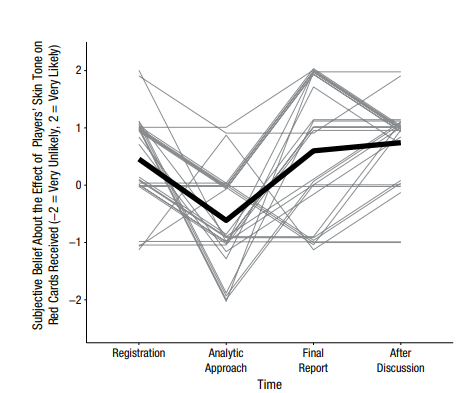
Another one I want to review soon: Many Analysts, One Data Set. A paper exploring how different choices during the analysis phase can lead to very different results.

Not a thing I’m reading, but I got in to a conversation this weekend about the most worthwhile eco-friendly trade offs people had made. Mine was buying these microfiber cleaning cloths and using them instead of paper towels. They clean better (both for scrubbing and dusting), can be thrown in with any load of laundry to get them clean, and last for a long time. At around $12 a pack for 24, I am guessing we got our money back pretty quickly in what we saved on paper towels.  I got so weirdly passionate about these that I apparently inspired others to buy them, so I figured I’d pass the link along.

5 Things About Peak Desirability

A couple weeks ago after my College Educated White Women post, the AVI sent along an Atlantic article about how everyone on dating apps is trying to date almost exactly 25% out of their league. 

The bigger more attention grabbing headline from this study though, was the finding that women’s desirability peaked at age 18, whereas men’s peaked at age 50. They included this chart:

Since I always get hung up on how these things are calculated and what they’re really telling us, I decided to take a look at the paper and the supplementary materials. Here’s what I found:

  1. Desire = PageRank When looking at a study like this, one of the first things I always want to know is how they defined their terms. Here, the authors decided that using a model where desirability = the number of messages received would be too simplistic, so they decided to use the PageRank equation. Yes, from Google. This equation is useful because it doesn’t just measure overall number of messages received, but how desirable the people who got in touch with you were. So ten messages from desirable people were worth more than 100 from less desirable people…sort of like one link from a famous blogger is worth more than ten links from lesser known bloggers. This choice made a lot of sense as “desire” is not just about how many people want something, but also how hard it is to get. However, choosing this definition does have some interesting consequences, which I’ll get to in a minute.
  2. The pool was not randomly selected, and the most desirable people were the outliers When the AVI initially sent me this article, one of his first comments was that generalizing from a sample of dating website users was probably not a great idea. After looking at the sample, he was completely right. Not only are these dating website users, but they were exclusively dating website users in large cities. There were other interesting differences….like check out the demographics table:  As a reminder, only about a third of US adults have a college degree. Those numbers for NYC are really unusual. You’ll also note that the average age of a user tended to be just over 30. So where did our highly desirable 18 year old women and 50 year old men fall? On the long tails:  Yes, I drew pink and blue arrows to show where the most desirable men and women fell. Sorry about that. Anyway, as you can see, those who showed up as the most desirable were not the best represented. This makes a certain amount of sense….18 year olds don’t join dating sites as often because they are frequently still in high school and have lots of access to people their own age. 50 year old tend to be married, partnered, or otherwise not looking. This is important because it introduces the idea that those not in the peak age range for use (23-33 from what I can tell) may have some survivor bias going on. In other words, if they log on and are successful, they stay on the site. If they aren’t, they leave. From what I can tell in my friend group, a 30 year old will stick it out on dating sites until they find someone, because that’s simply what everyone does. Other age groups may have different strategies. Since all the data came from one month (January 2014) it would not capture people who came and went quickly.
  3. Desirable men and women probably don’t have the same experience One of the more interesting discussions in the “network analysis” section of the paper, was when the authors mentioned that they had to include two different measures of interest in order to cover both genders. Because men send 80% of the first messages, they realized that assessing “interest” only by first messages would basically mean they only knew who men were interested in. Given this, they decided to also include replies as markers of interest. Thus, while the same equation was applied to both genders, one suspects this plays out differently. Desirable women are likely those who get many messages from men, and desirable men are likely those who get a lot of replies from women. For example, the study authors note that the most popular person they found in their data was a 30 year old woman in NYC who received over 1500 messages (!) in the one month they studied. They don’t list how the most popular male did, but one has to imagine it’s an order of magnitude less than that woman. It’s simply much harder to compose messages than it is to receive them, and with reply rates hovering at 15-20% one imagines that even extremely popular men may only be hearing back from around 100 women a month. In other words, the experiences of the genders are hard to compare, even when you use the same grading criteria.
  4. Decreasing your messages out would increase your page rank Okay, back to the PageRank system. Ever since Google first released their PageRank algorithm, people have been trying to optimize their sites for it. While Google has definitely tweaked their algorithm since releasing it, this study used the original version, which used the number of links your site makes as a divisor. In other words, the less you link to other sites, the higher your own rank. An example: suppose an 18 year old woman and a 30 year old woman get 100 messages from the exact same group of men. The 18 year old kinda freaks out and only replies to 1 or 2. The 30 year old woman seriously wants to find someone and replies to 20. Per PageRank, the 18 year old is rated more highly than the 30 year old. Now take a 30 year old man and a 50 year old man. The 30 year old man is all in on his dating app game, and messages 100 women, receiving 20 replies. The 50 year old man isn’t quite as sure and carefully selects 10 messages to women he thinks he has a chance with, getting 3 replies. If those replies came from “higher ranking” women than the 20 the other guy got, the 50 year old is now more “highly desirable”. In other words, users who are highly engaged with the dating site and taking chances will not do as well ranking-wise. Being choosy about who you reply to/message helps.
  5. Some of this may be up front decision making rather than personal One of the weirder downsides to online dating is the ability to set hard stops on certain characteristics of others. While in pre-computer days you would generally find out someone’s attractiveness first, now you can ask the site only to show you matches that are taller than 6’/older than 25/younger than 40, and the algorithm will do exactly what you say. This almost certainly impacts messaging behavior, and it turns out men and women approach ages limits really differently. OKCupid pulled their data on this, and here’s what they found: So our median male keeps 18 year old women in his age range for 5 years of his life (18-23), while our median female will only date 18 year old men for 2 years (18-20). It appears once women get out of college and hop on a dating site they pretty much immediately want to drop college aged men. On the other end, 48 year old men have a preferred age range nearly double the size of the age range 48 year old women set. Men raise their floor as they age, just not nearly as quickly as women do. Both genders appear to raise their ceiling at similar rates, though women always keep theirs a little higher. Thus, younger women will always be receiving messages from a much larger pool of men than older women, particularly since participation in dating sites drops off precipitously with age. A 30 year old woman (the average age) has men 26-46 letting her through their filter, whereas a 30 year old man has women 26-35 letting him through theirs.

Well there you have it, my deep dive in to desirability and PageRank as applied to dating! For any of you single folks out there, it’s a good time to remind you that just like Google results, online dating can actually be hacked to optimize your results, and that the whole thing is not a terribly rational market. Good luck out there!


Data Driven Apps for Everyday Problems

Please note: I am in no way affiliated with any of these apps. I just got them recently and have been using them, and thought they were fairly interesting for people who like to think about data or in a systematic fashion. In other words, I get no money for this.

One of the lovelier parts of living in 2018 is the ability to Google solutions to any problem. Recently I’ve been doing a lot of poking around for apps that might keep me organized in a few different areas, and these are some good ones I’ve found. To the shock of no one, all of them are pretty checklist or data driven. Since I suspect many readers of this blog probably think similarly to me, I thought I’d throw the suggestions out there just in case they would be helpful to others.

Cleaning:

While I have no idea how to pronounce the title of the Tody app, I love how it works. Basically, you select a list of rooms you have in your house, then the app recommends various cleaning activities that should be done for each. You add the ones that make sense to your list, set what type of cleaner you are (relaxed, standard or proactive) and it generates a list for you of what you should be doing.

The fun part is that each task has a status, so it’s sorted by importance. Tasks you should be doing often (like a quick tidy up of the living room) get overdue faster, so they go to the top of the list. Tasks that are due less often (like cleaning out the closets) get overdue more slowly. Basically “overdue” works by percentage, not just the number of days. I knocked off all the basic tasks yesterday, so now my list looked like this:

Note: I downloaded the app 7 days ago, and set a bunch of things up as “due” which is why they are all identical.

Anyway, I like this because if I have a few minutes to clean, this helps me spread out my efforts. I generally fall in to a bit of a pattern with cleaning, hitting some things frequently and other things only when I think “oh gosh, that looks really gross”. Once you check something off it goes to the back of the line, but then reminds you again once it comes due. You can do this for both cleaning tasks and various “replace” type tasks. As you can see, it suggested I set a reminder for changing my toothbrush (I go to the dentist on Monday) and I have it set up for my water filter as well.

My favorite part though is that you can create a family account. Both my husband and I downloaded it, and we now share the list. We haven’t used it, but you can also assign tasks to people, and compare effort. I’d imagine this would be good for assigning chores to kids.

There’s a couple other fun features: you can see which room collectively needs the most attention, you can sort by room, you can add your own tasks with frequency as you think of them, and you can add outdoor or car related things as well. Pretty fun, and good for those of us who have no memory/sense of when housework should be done and instead are just sort of careening. Also, you can run reports and checking a box is just satisfying. Good stuff.

Price-wise, it’s a one time cost of $6.99 for each person who downloads it.

Workouts:

I’m still playing with this one, but Freeletics seems pretty fun. It’s a workout app (mostly high intensity interval workouts) that uses an AI coach to give you a personalized workout plan. Every week you record how you did on the previous workouts and how much time you have next week, and it generates you a new plan. While this seems kind of basic, it’s actually nice not to have to put any thought in to it.

I think using your own basic data (I have limited free time this week, last week’s workouts were too easy) to drive what should be assigned is nice and a good use of feedback loops. It ensures you’re taking a break when needed, and pushing when you can.

The subscription price is a little high: $35 for 3 months. However, paying that price gives you access to three different apps: the running one, the bodyweight workouts one, and a gym program. I look forward to playing with this more often.

Eating:

I don’t really like apps that give you a meal plan, but I do get a kick out of checklists. Dr Michael Greger’s Daily Dozen Checklist  is based on the book “How Not to Die” by Michael Greger, and lets you check off each serving of the recommended foods you’ve had that day.

The only issues with this one is that Dr Greger is vegan based, so it’s probably not fun for anyone who’s not in to that.

Overall: I think the number one thing I’m getting out of these apps is a lot of data about what a creature of habit I am. I clean the same few things over and over, am at a loss for how to adjust when my workouts don’t go according to plan, and focus on the same few healthy foods. Having somewhere to track what I’m focusing on and (by default) point out what I may be missing is helpful. If anyone has any other apps they like, I’d be interested in hearing them!


College Educated White Women

As a college educated white woman, I was rather interested to see that my people have been making headlines lately. It all started with a Steve Bannon interview in Vanity Fair where he said “The Republican college-educated woman is done,” he said. “They’re gone. They were going anyway at some point in time. Trump triggers them. This is now the Trump movement.”

This quote launched quite a few op-eds and poll questions, which culminated in this chart from the Washington Post (source here):

Now I was pretty interested in this chart, since Andrew Gelman has taught me to be deeply suspicious of any reportedly wild swings in voting preference. However, looking a little closer I noted that he had the expanding gender gap as one of his 19 takeaways from the 2016 election, so I decided to take a closer look. What does it mean if a party loses a key demographic like that?

Well, it doesn’t entirely cause the drop you might think. I took a look at Gallup and Pew, and noted that Pew doesn’t show a dramatic drop in preference through 2017: 

Note: preference is not the same as people saying “I’m a Republican” or “I’m a Democrat” (both of which are down), but what people end up actually voting.

Anyway, I was curious why a massive drop-off in support from white college educated women wouldn’t translate in to a big jump in that graph, when it occurred to me that the underlying numbers are probably pretty different. Sure enough, per the Census Bureau, there are about twice as many Americans without a college degree (about 68%) vs with (about 32%). I can’t find exact breakdowns that take more than 2 factors in to account, but the same report shows that men and women have Bachelor’s degrees at about equal rates, and white people as a group have Bachelor’s degree at around a rate of 36%. The Washington Post puts the number of white people with college degrees at around 50 million, with the number without around 90 million. In other words, college educated white women are likely around 10% of the voter population, whereas non-college educated white men are likely around 20% of the total. A drop in one is made up for by the rise in the other.

So what does this mean for elections? Well, it’s complicated. Unlike gender, educational attainment varies wildly by state. According to Wiki, my state (Massachusetts) has the highest percentage of people with Bachelor’s Degrees in the country (about 40%), almost double the rate of West Virginia at about 20%. Going just off the Wiki list, the top 14 states with the highest levels of Bachelor’s degrees actually all voted for Hillary in 2016. Assuming those degrees are somewhat evenly distributed by gender, this may mean the loss has already been felt and that any further change will just be driving the states further blue. Since the electoral college system is in play, this could make the impact on national elections even smaller.

To complicate things in the other direction though, people with a Bachelor’s degree are much more likely to vote than those without one. For some reason the Census Bureau page that used to report this is down, but this site makes it look like the gap is pretty decent (80% for those with a Master’s or higher, vs 50% for a high school diploma). Again though, if the votes are unevenly distributed that could lead to less of an impact than you’d think.

I’ll be interested to see what the mid-term elections bring for updates to these trends.

What I’m Reading: August 2018

Well it’s summer and we’ve had one heck of a heat wave up here, with humidity that I heard dubbed “sweatpants heat”. It’s gross. I’m particularly miserable about the whole thing because I’ve caught a terrible cold, which does not play well with the heat/humidity. I was thinking about the unique pain that summer colds bring, and decided to Google around to see if there was any research on this. Turns out there is! It appears that summer colds are actually caused by different viruses than winter colds, so the feeling that they’re a little different is a real one.

In other important news, this website went through and used the water displacement method to figure out the air to chip ratio for most common brands of chips. The results are oddly fascinating:

The Assistant Village Idiot did an interesting post about media bias, in the form of compiling Time and Newsweek covers of Presidents from Ford on. A quick look gives you a feel of how each President was portrayed. I previously might have argued that magazine covers didn’t effect me that much, but ever since I found out that I thought Billy Graham died years before he did (probably) because of a TV Guide cover I’ve been less confident about this. Donna B raises a good question in the comments about the covers given to those who ran for the presidency but lost during those years.

Some surprisingly bad news: a huge randomized control trial of state sponsored pre-K shows the positive effect is only present at the end of the pre-K year, and turns negative by 3rd grade with kids who went to free pre-K performing worse in math and science than their peers who stayed home. This is surprising as I thought the worst case scenario would be “no effect”. The study authors have two theories for the results. First, it’s possible some kids just do better at home. Second and not unrelated, they note that more of the kids in the pre-K program ended up in special needs classes (remember, they were randomly assigned to pre-K vs home) and they wonder if some slower to develop kids got inappropriately tagged as special needs. It appears this early designation then followed them and they may have eventually held back beyond what was needed. Still a good data point in the “not everything that sounds like a good idea is one” train of thought.

I’ve been thinking a lot about viruses and other various pathogens recently, and the theories that they impact chronic disease more than we realize at the moment. For example, a recent Harvard study suggests that the herpes virus may help precipitate Alzheimer’s Disease. Celiac disease may be triggered by a candida infection. Some strains of intestinal bacteria may make it really hard for people to lose weight. The mechanisms for this are interesting and varied. The Alzheimer’s theory hinges on the idea that amyloid-B (the thing that ends up clogging up the neurons in Alzheimers patients) is produced to try to fight off HHV-6 and HSV-1, but something gets out of control and it takes over. Candida and gluten apparently bind to the same site on the walls of the intestines, so the theory is the body starts trying to fight off candida but produces antibodies to everything binding at that site. Gut bacteria that thrives on sugar or other “bad” treats might release toxins when you stop eating it that make you feel miserable until you resume previous eating patterns.  One statement I read somewhere while reading this stuff stuck with me “maybe our pathogens didn’t go away when we invented antibiotics and vaccines, maybe they just got less deadly and more subtle”. I’m completely fascinated by these theories, though we’ll see if they pan out.


Refugees and Resettlement

It’s always somewhat gratifying when I hear someone in my personal life change the way they speak about an issue because of my blogging. It’s even more gratifying when I get the sense they’ve actually internalized some of the ideas and aren’t just being careful because I’m around. This happened last weekend when my brother casually mentioned that he’d heard that the US actually resettled about a third of the world’s refugees. He mentioned that he wasn’t sure how that was possible since he knew the number of refugees the US took in was dropping, but he wondered if there was some meaning to “resettled” he was missing. As a thank you to him for being so conscientious about his adjectives, I figured I’d look in to the stats and definitions for him.

First, I have to admit it took me a few minutes to find anything on this, mostly because I thought he said the data came from “UNH”, which I took to mean the University of New Hampshire. Turns out he actually said the UNHCR, or the UN High Commissioner for Refugees. Oops.

When I finally found the right page, I was impressed to see that they actually have really wonderful resources defining all of what their terms mean. For refugees, the three solutions they work towards are voluntary repatriation (returning to their home country when it is more stable), resettlement (moving permanently to another country) or integration (becoming part of your host country).

It’s those last two that seemed to be causing the confusion (at least for me), but it made sense when I read it. A host country is the country the refugees initially go to when they flee their own country. Unsurprisingly, these are most often countries closer in proximity to them that will allow them to stay there. From their fact sheets, the top host countries are Turkey, Pakistan, Lebanon, Iran and Uganda: The refugees that stay in those countries aren’t considered “resettled”, because it’s considered temporary. The UNHCR works with those refugees to identify those who are most vulnerable (you cannot apply), and then submits their application. They don’t get to pick the country they go to. Unlike the host country, the countries that accept refugees through this program agree to give them permanent legal status in their country.

So does the US really accept a third of all resettled refugees cases? Yes, last year that was true. In other years it’s been even higher. I can’t embed it here, but this page has a really nifty graph of the total applications/departures each year, and you can filter it by resettlement country. In 2017 there were about 75,000 UNHCR applications for resettlement, the US took 26,000 of those.  In 2016 there were 163,000 applications, and the US took 108,000. Now I should mention that by “took” I mean took the application. Countries still do their own screening process before people are actually resettled.

Question 1, answered! Oh, did I mention there was a second question?

As we were talking about the plausibility of this stat, we raised the issue that we were constantly hearing about how many refugees countries like Germany were taking in. We were trying to figure out what category those people fell in to, and how they fit in to this picture.

As far as I can tell, the migrants making the headlines in Europe are either asylum seekers or economic migrants. Asylum seekers differ from resettled refugees in that resettled refugees are sent to a country under an agreement/discussion with the UNHCR and after a screening, and asylum seekers just show up and are screened after the fact. Since only 1% of the world’s refugees are ever resettled, the vast majority of refugee discussions are talking about asylum seekers. I won’t pontificate much more on the differences as that gets in to all sorts of legal issues, but I can say I had fun playing around with the graph generator on the UNHCR website. Here’s the number of resettled refugees France, Germany and the US have taken since 2003, and what countries they came from:


5 More Things About Fertility Rates

Normally when I write a blog post, it’s because some topic was rattling around in my head too much and I want to get it out of there. This works most of the time, and after hitting publish I tend to stop thinking as often about whatever it is I wrote about. Sometimes however, this works in reverse and my initial post sparks me and various readers/others in my life to keep talking about the topic. My last post on fertility rates was of the latter group, and I’ve spent the past week discussing it with people both online and in real life. The roundup below is 5 of the most interesting things that came out of those discussions:

  1. Male fertility is dropping I mentioned last week that while fertility rates are always counted in children/woman, we shouldn’t forget the role of men in the whole thing. To help prove that point, commenter Christopher B pointed me to an interesting article I hadn’t seen about dropping sperm counts in Western men. According to the meta-analysis cited, sperm counts have dropped 50-60% since about 1973. There wasn’t a particular reason cited, but the Assistant Village Idiot mentioned sleep deprivation, and the authors didn’t rule out chemical exposures or increasing obesity. I also found a paper that found that “After adjusting for female age, conception during a 12-month period was 30% less likely for men over age 40 years as compared with men younger than age 30 years”. This is almost certainly playing a role in dropping fertility rates, particularly if you approach it from the “why don’t people have 3 or more children as often anymore?” angle. If you struggle to have a first child, you may pay for infertility treatments, but very few people go through the time and expense of them for a third child. The biggest impact however, may be on my next topic…..
  2. Reducing unplanned pregnancies reduces fertility rates The sentiments “lower teen pregnancy rate” and it’s close cousin “reduce unintended pregnancies” are pretty non-controversial as far as public health goals go. While the methods proposed to meet these goals can be quite controversial (abortion, free birth control, abstinence only education, etc), most people actually agree on the end game. Thus when we look at the fertility rate and why it’s dropping, we have to consider that 45% of pregnancies in America are still considered “unintended”, with about 40% of those ending in an abortion. This got me wondering a few things. First, I wonder if the dropping sperm counts have actually impacted how frequently unplanned pregnancies occur. Teen pregnancy rates have been trending downward for quite some time, and one wonders if that’s been helped by things like dropping sperm counts. It’s probably not the whole reason, but it certainly seems unlikely to hurt.
  3. Our messages around teen and unplanned pregnancies may bleed over in to our thinking about planned pregnancies. One of the posts that kicked off all my thoughts on fertility rates was this one by the Assistant Village Idiot. I don’t know that I agreed with the example he gave, but the core thought of his post seems true: it is really really hard to discourage teens from having babies without saying things about how challenging kids are or how important it is that you have your ducks in a row before you have them. I mean, imagine that you find out that a 15 year old you know and care about is having unprotected sex with a partner. What do you say to them? Your first thoughts are almost certainly about how many opportunities they’ll be giving up and how much work kids are. This is the dominate message most kids receive until at least 18, longer if they’re college bound, and almost always including some time to figure yourself out. Even groups that don’t necessarily support the “figure yourself out” phase tend to have their own pressures. For example, in my Baptist high school, you definitely needed to find someone to marry first (that you wouldn’t divorce), and you needed to have enough money to make sure you never had to rely on welfare. The point here is not that any of this advice is wrong, but rather that it’s the dominant message for the first 10-15 years most people are biologically capable of having children, and people likely take them to heart for much longer than that.
  4. Kin influence One of the more interesting theories I read while reading up on fertility rates was the theory of “kin influence”. As I mentioned, it’s been noted that increased education drops fertility rates quite quickly. One proposed mechanism for this is that it’s not necessarily what education adds, but what it subtracts: 24-7 time around your family. The idea is that biologically, your family has a high motivation to encourage you to have kids, because this helps your families DNA continue. Educators and friends may care for you, but they don’t not have the same interest in encouraging you to have kids. Interestingly, even in the developed world, people who live closer/are closer emotionally to their family tend to have more children. Some of this is likely also related to resources…most people take advantage of grandma/grandpa babysitters before they look at other options. The paper didn’t mention it, but I have to wonder how this theory overlaps with the issues in #3. Parents tend to be some of the strongest voices telling teens not to get pregnant, which suggests that development doesn’t just shift the attitudes of those who might be having children, but the generation above them as well. When fertility rates fall rapidly in a country like Iran, is that all men and women of childbearing age deciding to have fewer children, or are their own parents there encouraging them to take advantage of more educational opportunities first?
  5. Child mortality rates To end on a sad note, it’s terrible to realize that some of the very high fertility rates in the developing world may actually be driven by child mortality. While it’s hard to prove causality, it appears that everywhere child mortality drops, fertility rates drop with it. From Our World in Data:  This is a good reminder that countries with total fertility rates of 6 children/woman or more almost never result in families of 6 adult children, and that our drops in fertility rate aren’t always as dramatic as they sound. For example, in the year 1800 in the US, the fertility rate was nearly 7 children/woman, while today it is just under 2. However, if you factor child mortality in, the drop is much less dramatic: I don’t know exactly what to make of this, but I can speculate that if you have good confidence your children will live, you may plan more for each of their births. It also just reminds me how grateful I am to live in this time period.

Overall this has been an interesting discussion and I appreciate everyone’s comments!